Silver Screen Library
Best of The Strand Magazine edited by Andrew Gulli and Lamia Gulli - Review

Follow Us:





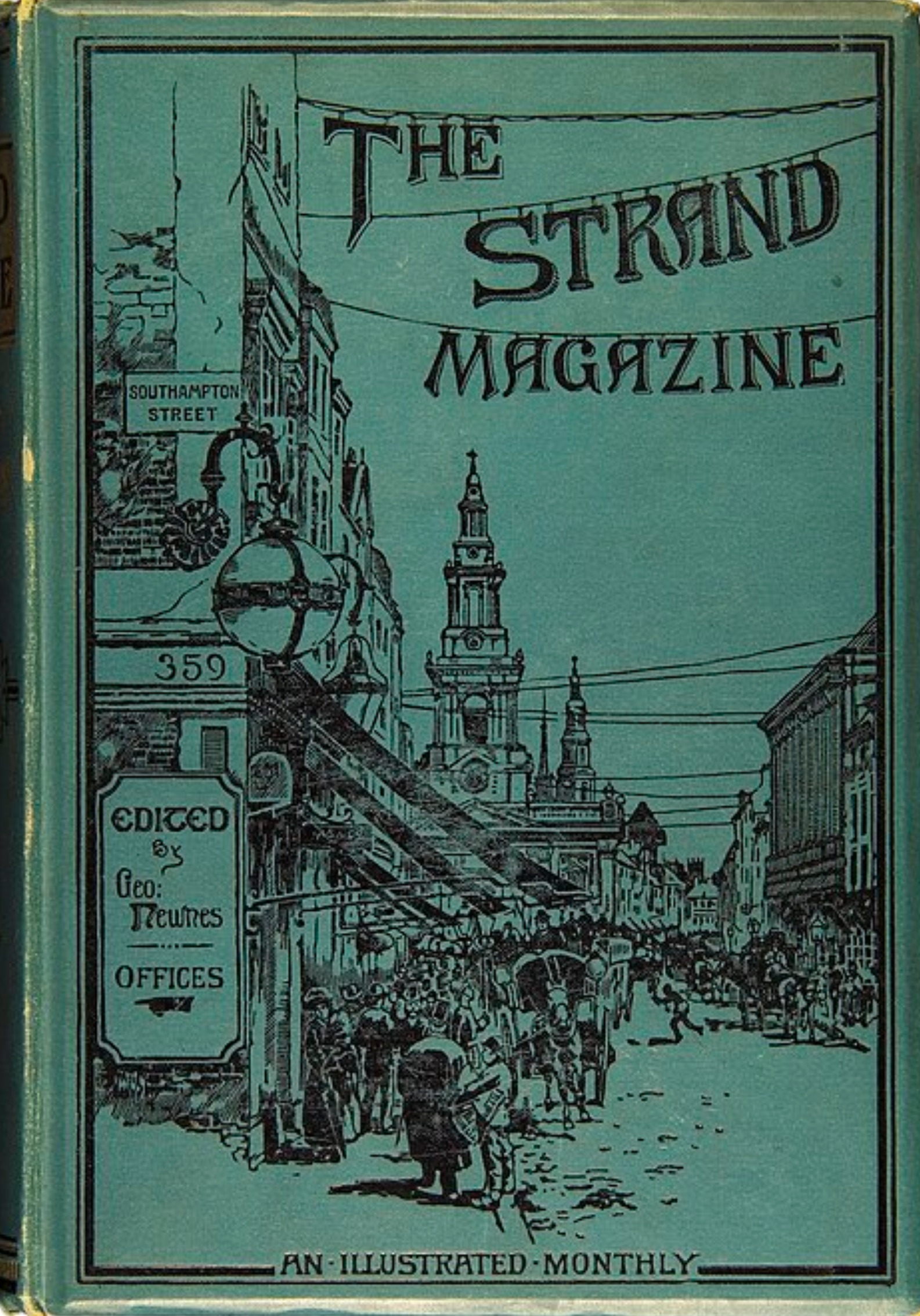
When crime fiction fans hear the name The Strand Magazine, they immediately think of Sherlock Holmes, and with good reason. Holmes’s enormous popularity with the general public began with the publication of the first Holmes stories in the early issues of The Strand. Over the ensuing years, The Strand became synonymous with quality British mystery fiction. Agatha Christie published several Hercule Poirot stories in The Strand, and other notable authors who contributed included Dorothy Sayers, Rudyard Kipling, and P. G. Wodehouse, who published many of his Jeeves stories in the magazine. Unfortunately, changing public tastes and rising costs led to the magazine’s demise in 1950.
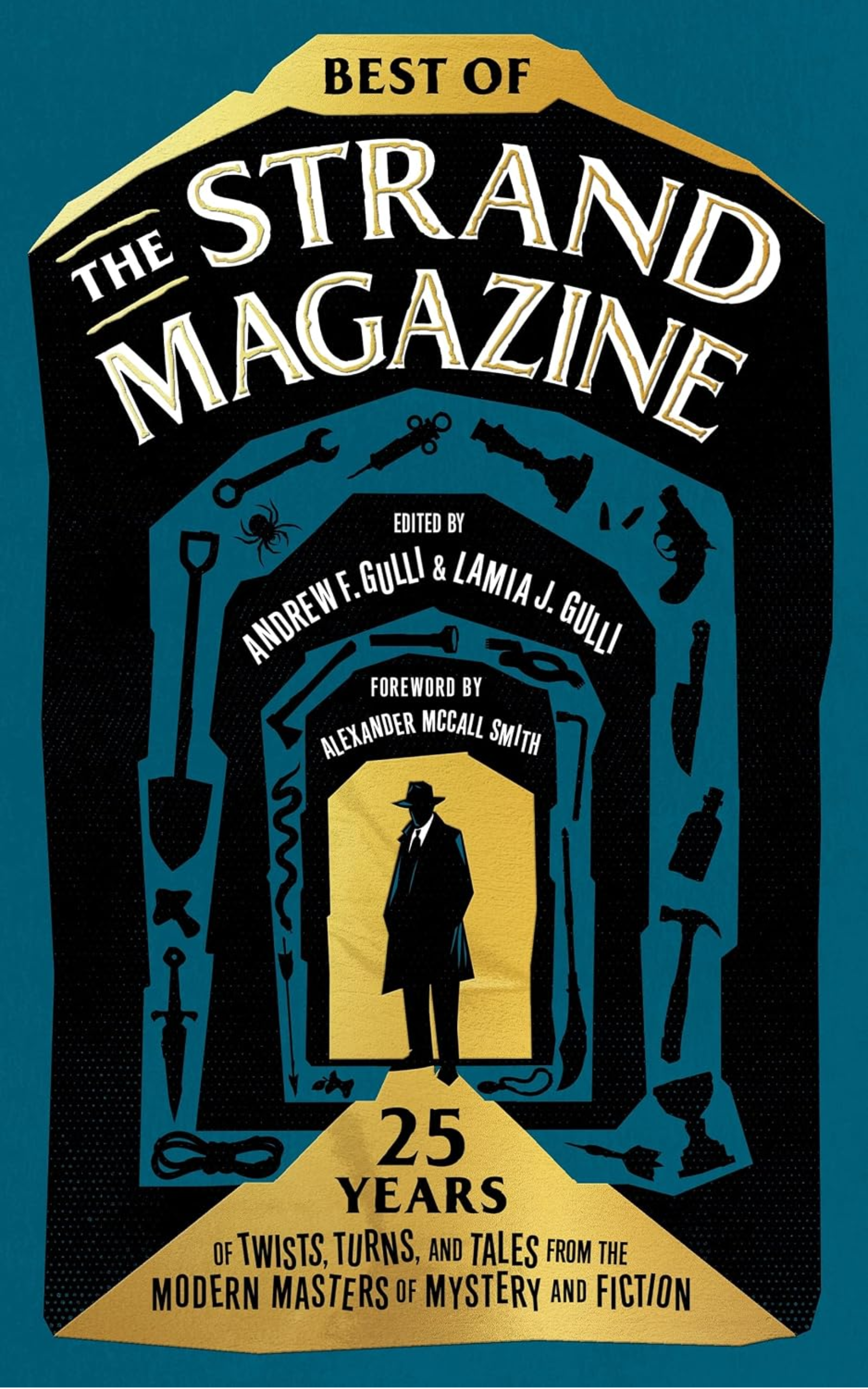
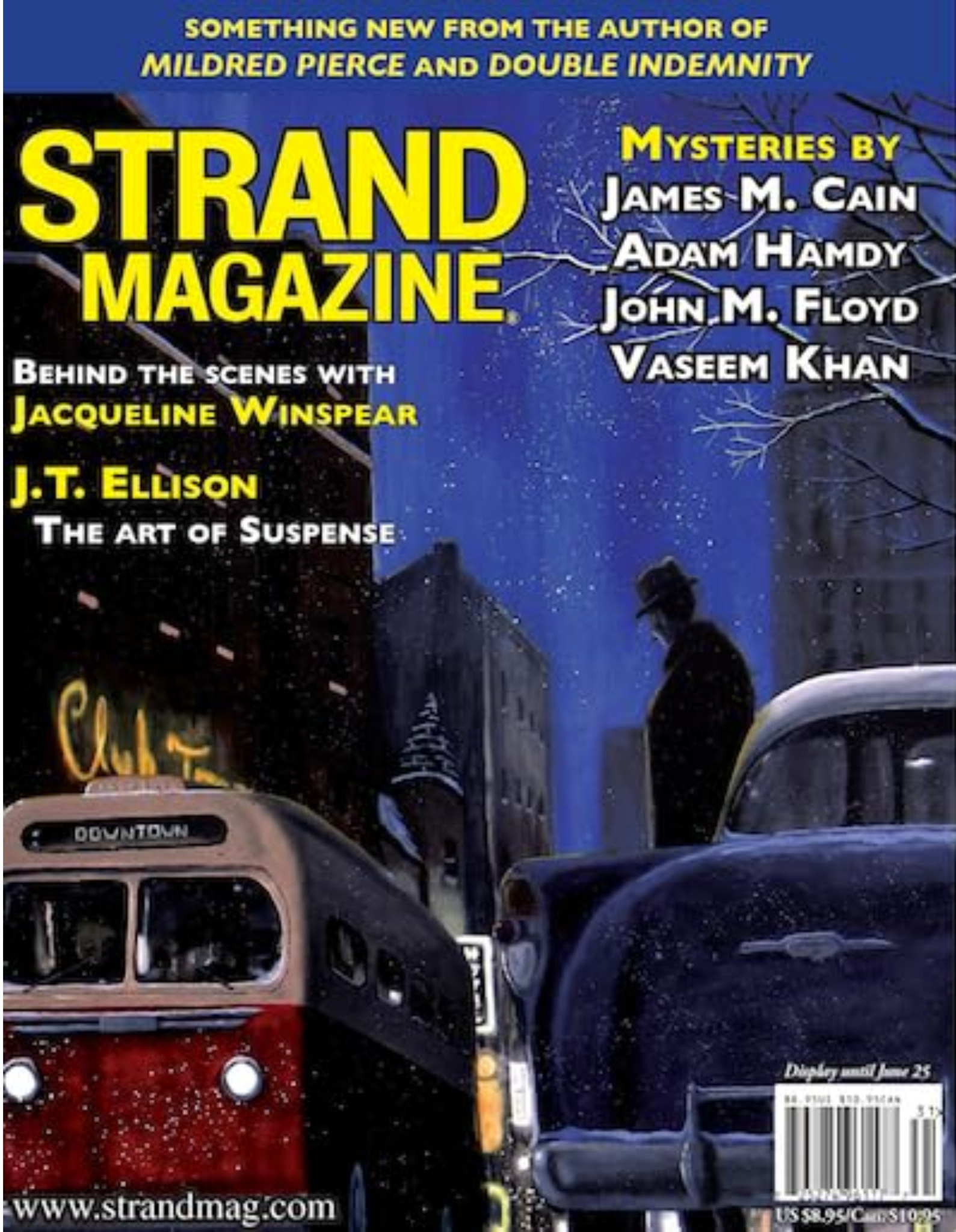
A demise, that is, until managing editor Andrew Gulli launched a new version of The Strand in 1998 in the United States. This version of The Strand is patterned after the original, with stories, author interviews, book reviews, and non-fiction articles. Editors Andrew and Lamia Gulli personally recruited many well-known authors to contribute to the publication. To commemorate the magazine’s 25th anniversary, they published Best of The Strand Magazine, an anthology of 29 stories they believe represent the magazine’s content and quality. The author list reads like a
veritable who’s who of modern mystery fiction, including Michael Connelly, Jeffery Deaver, Alexander McCall Smith (who also wrote an introduction for the anthology), James Lee Burke, Jo Nesbo, Joyce Carol Oates, Ray Bradbury, Walter Mosley, and John Mortimer. The stories don’t represent the best examples of these authors’ output, only the best of what previously appeared in The Strand. As a result, some stories seem routine and unexceptional. However, the anthology has enough high-quality material to please genre fans.
As an introductory explanation, although the anthology’s subtitle claims it comprises “tales from the modern masters of mystery and fiction,” some stories aren’t mysteries or crime fiction as most readers understand those terms. The anthology includes fantasy, real-life and paranormal horror, and other stories best classified as general literature. Those expecting something similar to what they might find in genre magazines like Ellery Queen or Alfred Hitchcock may be disappointed for that reason (although the anthology has several such stories). Also, the anthology does not contain an introduction or other explanatory material for each story, only a brief biography of the various authors at the end of the book. This results in some radical, possibly disconcerting, mood shifts from story to story. (A list of publication dates for each story would have been helpful as well.)
The editors front-load Best of the Strand Magazine with stories by Michael Connelly and Jeffery Deaver featuring their popular series detectives, Harry Bosch and Lincoln Rhyme. The Bosch story is merely routine (one of several such in the book), but Deaver’s “Where the Evidence Lies” is a delight. The story’s title describes Lincoln Rhyme’s dilemma here. He’s in Florida as a guest lecturer when the local sheriff’s department asks for his help. A private plane exploded shortly after takeoff, and its passengers and cargo are now at the bottom of the Atlantic Ocean. Rhyme can’t conduct his usual forensic analysis, so he must rely on witness interviews to figure out what happened.
Several stories in the anthology touch on today’s relevant social issues, and the authors’ personal views may influence how some readers regard the story. Walter Mosley’s “An Unlikely Series of Conversations” looks at diversity and racial stereotyping in somewhat of a whimsical manner. James Lee Burke’s “Deportees” strikes a more serious tone. The story is set in the early days of World War II, as Hackberry Holland, one of Burke’s series protagonists, hides a group of Mexican immigrants on his ranch. A local lawman is rounding up all the immigrants he can find on the supposed theory that they are Japanese agents sneaking over the border. The parallels between this story and today’s immigration issues are obvious, but Burke handles the story’s resolution in a manner that definitely wouldn’t happen today.
“Adventure on a Bad Night” by Shirley Jackson also touches on some of the same issues as “Deportees.” Most readers will note that Jackson and some other authors in the anthology, such as H.G. Wells and Tennessee Williams, died well before the new version of “The Strand” began publication. However, these stories had never been published before, and the editors conducted extensive research to find them. In the case of Jackson’s story, their effort was well worth it. The story also takes place during World War II, as a woman named Vivien goes to a local cigar store one night to pick up some cigarettes. She finds a frightened, very pregnant foreign woman wanting to send a telegram to her boyfriend in the service. The clerk suspects the message is just a scam, but Vivien wants to help the pregnant woman out. The story is a brief, touching episode that contrasts callousness with kindness.
Best of The Strand Magazine also includes several more traditional stories by lesser-known authors, like those found in magazines such as Ellery Queen and Alfred Hitchcock . In “Foreverglow” by John M. Floyd, a department store sales associate and her boyfriend hatch a scheme to steal the store’s most valuable diamond collection. The robbery doesn’t quite go as planned, and the story ends with a highly satisfying twist. In “Santa Muerte” by Jonathan Rabb, an Englishman in Mexico gets caught up in a scheme to steal a valuable formula for a new cancer drug. Once again, things aren’t quite as they seem. “Risk Assessment” by Zoe Sharp is the story of a serial killer who poses as an insurance salesman to find potential victims whose deaths won’t lead to a major investigation. His most recent killing proves more challenging than he first anticipated.
The most unusual story in the anthology is probably “A Sad Mistake” by R. L. Stine. The main character is Victor Frankenstein, who has gone into hiding following the events in the novel. Despite the doctor’s precautions, a stranger finds him and requests that the doctor bring the stranger’s dead brother back to life. The experiment succeeds, but the results spin wildly out of control. Despite its horror trappings, this story would have fit well in a traditional mystery magazine.
No collection of stories from any version of The Strand would be complete without a tribute to Sherlock Holmes. This anthology has two such tales. “’Twas the Season” by Mark Mower is a typical Holmes pastiche, set at Christmas time, as the detective and Dr. Watson try to prevent a murder. Nothing distinguishes this story from dozens of other Holmes pastiches written in recent years. By contrast, the anthology’s last story, “The Murderer at the Falls” by Michael Mallory, is, as the title suggests, another variation on the classic encounter between Holmes and Moriarty at Reichenbach Falls. I thought I had seen every possible permutation of those events, but the author comes up with something new and fascinating here.
Most of the stories in Best of The Strand Magazine are very good. A few, like “Deportees" and “A Sad Mistake,” are excellent. And as those two tales illustrate, the stories provide readers with many fictional themes that go far beyond traditional mystery. There are no outright duds here. A few stories are disappointments only because I had expected more from the authors involved. Overall, however, Best of The Strand Magazine is a great tribute, both to the magazine’s current incarnation and its illustrious predecessor.
NOTE: The publisher graciously provided me with a copy of this book through NetGalley. However, the decision to review the book and the contents of this review are entirely my own.
In this clip, editors Andrew and Lamia Gulli discuss Best of The Strand Magazine with Patrick Milliken of the Poisoned Pen Bookstore:
Read other reviews of Best of The Strand Magazine:
Andrew Gulli has been the managing editor of the new version of The Strand Magazine since its inception in 1998.
Buy issues of The Strand Magazine on Amazon:


Header Photo: "Riot Radio" by Arielle Calderon / Flickr / CC By / Cropped
Silver Screen Video Banner Photos: pedrojperez / Morguefile; wintersixfour / Morguefile
Join Button: "Film Element" by Stockphotosforfree
Twitter Icon: "Twitter Icon" by Freepik
Facebook Icon: "Facebook Icon" by Freepik
LinkedIn Icon: "LinkedIn Icon" by Fathema Khanom / Freepik
Goodreads Icon: "Letter G Icon" by arnikahossain / Freepik
Strand Magazine: "The Strand Magazine Bound Volume 1894" by Michael Maggs / Wikimedia Commons / Public Domain
Certain images on this site appear courtesy of Amazon.com and other sponsors of Silver Screen Videos for the purpose of advertising products on those sites. Silver Screen Videos earns commissions from purchases on those sites.
© 2026 Steven R. Silver. All rights reserved.
