Silver Screen Library
Coyote Hills by Jonathan Kellerman and Jesse Kellerman - Review

Follow Us:







I’ve read dozens of PI mysteries over the years, some much better than others, and most gloss over the profession’s mechanics. While well-researched medical novels go into detail about how surgeons perform complex operations and legal thrillers showcase the fine art of cross-examination, PI novels skip the nuts and bolts of real investigations. Witnesses reveal in a few seconds exactly what the PI needs to advance the investigation, leaving more time and pages for shootouts, fistfights, car chases, and similar activities that rarely occur in real life. Happily, Coyote Hills, by the father-and-son team of Jonathan and Jesse Kellerman, is an exception. The book’s protagonist, Clay Edison, shows readers how to question witnesses, how to cultivate police and other external sources, and how to use the internet and social media en route to unraveling a complex, fascinating mystery.
Coyote Hills is the sixth in the authors’ series about Clay Edison. He is a former county coroner turned private investigator. Earlier novels in the series focused on his years as a coroner before he changed careers in the two most recent books. Coyote Hills begins when Edison agrees to help fellow PI Regina Klein on a case. A year earlier, the body of the son of a wealthy couple
washed ashore in San Francisco Bay. When the autopsy revealed various drugs in his system, the police dismissed the case as an accident resulting from the victim falling and hitting his head. The parents disagreed, and Edison arrived to work on the case.
Edison’s history in the coroner’s office comes in handy when he recognizes the combination of drugs in the victim’s system as the same as those found in a case he worked on several years earlier that also involved a body washed up onshore in a different part of San Francisco Bay. Sensing a pattern, Edison inquired further and discovered two more victims who died at different times. He enlists the help of a nerdy scientist who works at a research center studying bay currents to determine when and where the victims ended up in the water. He also starts researching the victims to discover what, if anything, they had in common.
Coyote Hills is a great example of a police procedural in which the investigator isn’t an actual member of law enforcement. Here, the various police departments where the bodies were found haven’t communicated with each other, and Edison has to “connect the dots” on his own. To do so, he engages in some clever verbal trickery, such as posing as a member of the media to get access to a video recorded by a witness who discovered one body. He also goes down a twisted rabbit hole of internet dating sites, including one that, for a fee, creates an AI girlfriend customers can interact with, including one victim and later Edison. When dealing with the police, Edison pulls the “I’m one of you” card when needed and learns which investigators are willing to help and which just want to close cases, solved or not. These parts of the book were often bizarrely kinky but completely fascinating.
Much of Coyote Hills is dialogue involving pages-long conversations between Edison and various witnesses. Overly talky novels, especially thrillers, can often be boring. Here, however, readers can follow Edison as he gradually pulls important information from witnesses who weren’t very willing to reveal anything. Later, when he gets the various police agencies to work together on the case, readers get a good look at official interrogations as the police home in on one suspect.
Humor is often an integral part of PI mysteries, especially those written in the first person, and Coyote Hills has its share of witticisms. However, Edison isn’t looking to deliver wisecracks and one-liners in every paragraph. Instead, the authors insert their jokes judiciously but effectively. For example, Edison once notes, as security guards are escorting him out of a store where a witness works: “If enduring public humiliation was an Olympic sport, all the gold medalists would be teachers. Flight attendants would take the silver, restaurant workers the bronze. But PIs would consistently make the quarterfinals.”
At times, Coyote Hills drags; however, when the authors shift focus from Edison’s case to his personal life. Unlike many PIs, he has a happy marriage and a loving family. The book shifts focus occasionally to typical family scenes. These scenes are sweet, but they have nothing to do with the novel’s focus. Edison had no flash of inspiration based on an interaction with his family. Readers may feel a disconnect when the authors shift back and forth for no reason other than to demonstrate that Edison’s home life is good. Similarly, instead of ending the book with Edison or the police apprehending the killers, the authors add a conclusory chapter detailing the eventual trial. Condensing what would, in real life, be a multi-week murder trial into one ten-page chapter is an exercise in futility for the authors and a source of frustration for readers.
Coyote Hills is an excellent example of a rarely encountered subgenre. It follows a dogged private investigator unraveling a complex, at times bizarre, mystery and introducing a lot of strange details that will be completely foreign to most readers. The result is gripping passages and an ultimate resolution with some surprises. The authors go off on occasional tangents and lose focus, but they always return to the main storyline. Coyote Hills is the type of novel that will keep readers up late at night and then make them feel guilty about introducing them to some truly strange kinks. I really enjoyed heading into those hills with Clay Edison.
NOTE: The publisher graciously provided me with a copy of this book through NetGalley. However, the decision to review the book and the contents of this review are entirely my own.
In this clip, authors Jonathan and Jesse Kellerman discuss Coyote Hills with Shawn French at The Determined Society podcast:
Read other reviews of Coyote Hills:
Jonathan Kellerman is the #1 New York Times bestselling author of more than three dozen bestselling crime novels, including the Alex Delaware series, The Butcher’s Theater, Billy Straight, The Conspiracy Club, Twisted, True Detectives, and The Murderer’s Daughter. He is also the author of two children’s books and numerous nonfiction works, including Savage Spawn: Reflections on Violent Children and With Strings Attached: The Art and Beauty of Vintage Guitars. He has won the Goldwyn, Edgar, and Anthony awards and has been nominated for a Shamus Award.
Jesse Kellerman is Jonathan Kellerman’s son and has written dozens of plays and published several novels. He has won numerous awards, including the Princess Grace Award for Playwriting ("Things Beyond Our Control") and the Grand Prix des Lectrices de Elle ("The Genius"/"Les Visages"). His novel Potboiler was nominated for the Edgar Award for Best Novel. An essay, "Let My People Go to the Buffet," was included in Penguin's Best American Spiritual Writing (2011).
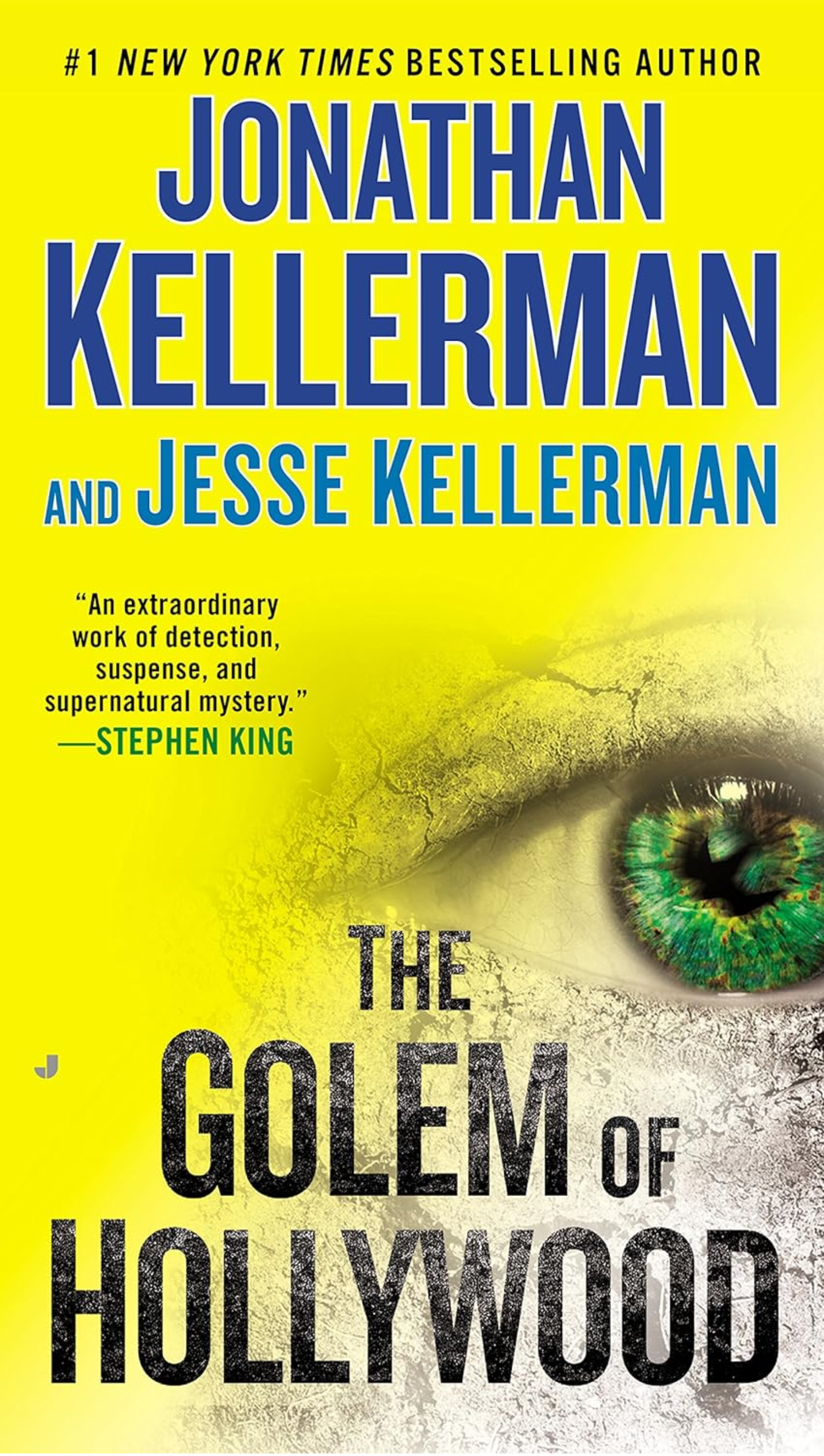
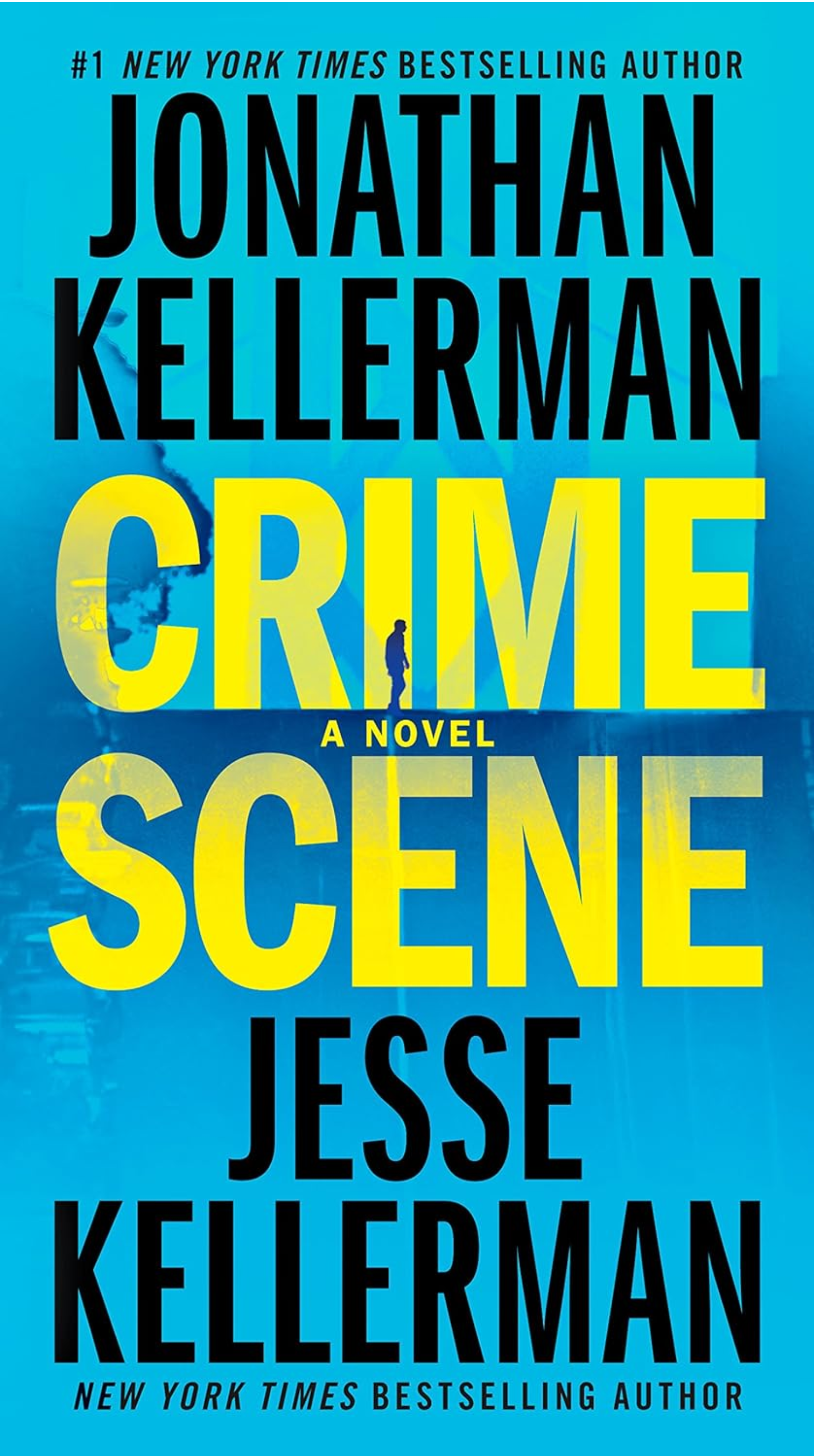
Jonathan and Jesse Kellerman have co-authored The Golem of Hollywood and The Golem of Paris, as well as six novels in the Clay Edison mystery series, including Coyote Hills.
Buy other books by Jonathan and Jesse Kellerman on Amazon:

Header Photo: "Riot Radio" by Arielle Calderon / Flickr / CC By / Cropped
Silver Screen Video Banner Photos: pedrojperez / Morguefile; wintersixfour / Morguefile
Join Button: "Film Element" by Stockphotosforfree
Twitter Icon: "Twitter Icon" by Freepik
Facebook Icon: "Facebook Icon" by Freepik
LinkedIn Icon: "LinkedIn Icon" by Fathema Khanom / Freepik
Goodreads Icon: "Letter G Icon" by arnikahossain / Freepik
Certain images on this site appear courtesy of Amazon.com and other sponsors of Silver Screen Videos for the purpose of advertising products on those sites. Silver Screen Videos earns commissions from purchases on those sites.
© 2026 Steven R. Silver. All rights reserved.
