Silver Screen Library
Golden Age Christmas Mysteries edited by Otto Penzler - Review

Follow Us:






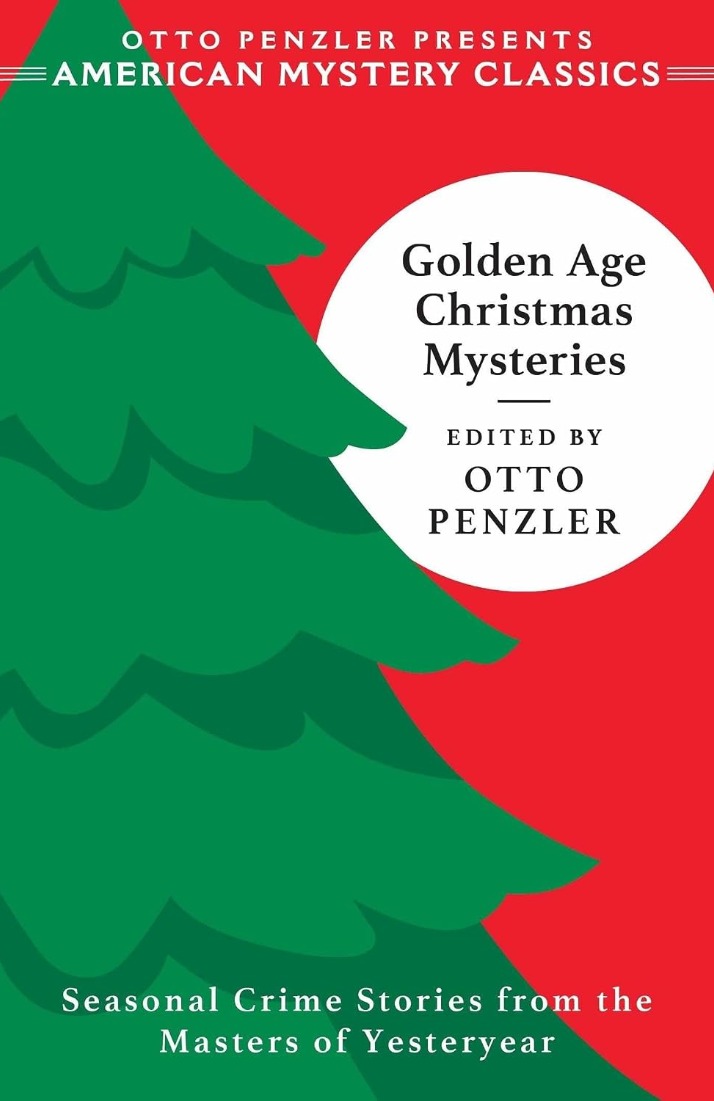
When I review an anthology, I often begin the review by paraphrasing Forrest Gump’s classic comment comparing life to a box of chocolates. However, that simile doesn’t seem appropriate for a review of Christmas-themed short stories. Therefore, I’m going to start my review of Otto Penzler’s Golden Age Christmas Mysteries by comparing the anthology to the presents exchanged at a Secret Santa office Christmas party. You never know what you’re going to get. But while most chocolates are somewhat tasty, a few stories in this collection, like some Christmas party gag gifts, are duds. Other stories are merely routine. Fortunately, the collection has enough quality tales to balance out the duds … barely.
Otto Penzler owns the world-famous Mysterious Bookshop and has access to thousands of mystery stories published over the years, many of them extremely hard to find today. The Bookshop has published a series of novels and story collections from the 1920s to the 1950s titled American Mystery Classics. Those books include several themed anthologies edited by Penzler, of which Golden Age Christmas Mysteries is the latest. The anthology includes 14 stories from that era set on or near Christmas. Penzler’s definition of “mystery” is broad and also includes
stories that relate in some way to the commission or attempted commission of a crime. Although some stories were written by well-known mystery authors like Ellery Queen and John Dickson Carr, others (including some of the best) were written by writers best known for other works, like Pat Frank and Damon Runyon.
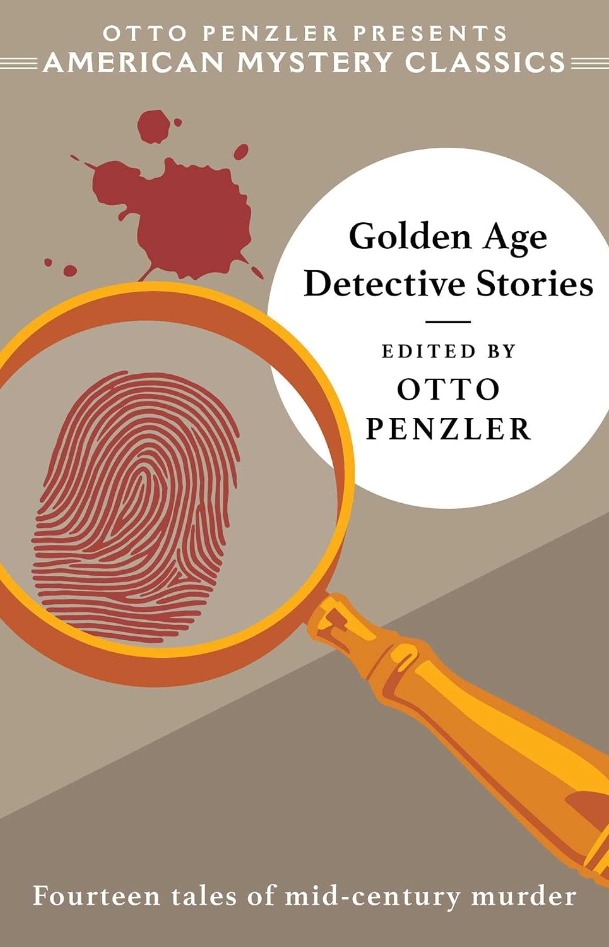
In his introduction to Golden Age Christmas Mysteries, Penzler notes that many of the stories here have seldom appeared in other anthologies over the years. That may be more a function of other anthologies having exhausted the supply of higher-quality Christmas tales. While Penzler had a vast supply of stories to choose from for his other anthologies like Golden Age Detective Stories, this collection’s highly specific subject limited his options considerably. As a result, the anthology has a significant percentage of duds and run-of-the-mill stories.
My favorite story in Golden Age Christmas Mysteries was “Dancing Dan’s Christmas” by Damon Runyon. Runyon’s most popular works were his tales of the less-than-fully law-abiding guys and dolls he loved. “Dancing Dan’s Christmas” is a perfect seasonal tale with a great twist ending. The unnamed narrator enjoys Christmas Eve drinks at the local speakeasy with the owner and two remaining customers: Dancing Dan (as nimble with his fingers as with his feet) and Ookie, a drunk dressed as Santa Claus. The tale proceeds in typical Runyonesque style to a surprising, but fitting ending.
“The Christmas Bogey” by Pat Frank was another offbeat story in the anthology. Frank was better known for some 1950s apocalyptic fiction, like the novel Alas, Babylon, which I grew up with. This story was written in 1957, a time when nuclear war with the Soviet Union was an actual threat. In the tale, an unknown aircraft approaches U.S. airspace on Christmas Eve and gets a lot closer than it should have because most of the military personnel on duty that night are preoccupied with holiday festivities. I thought I knew where this one was going, but I was wrong. The ending is better than I imagined and ties the element of crime into the story.
Some stories in the collection involved traditional crime-solving. In Ellery Queen’s “The Adventure of the Dauphin’s Doll,” a master jewel thief steals a valuable gem from a closely guarded department store window display… after warning Ellery what he intended to do. Ellery must figure out whodunit and how they dun it. Anthony Boucher’s “Mystery for Christmas” also involves a jewel robbery, this time at a Christmas party where the guests were dressed up as Disney characters.
The backstory is needlessly complicated because it includes a story within a story, but the essential clue is especially clever.
John Dickson Carr’s “The Stolen Christmas Box” (written under his Carter Dickson pen name) also involves a story within a story and is also needlessly complicated. The owner of an old mansion tells guests at a Christmas party a story about a seemingly impossible murder that occurred in an upstairs room nearly 300 years earlier. He provides his guests with a dull, overlong story about the era’s political history that led to the murder. The mystery’s solution is a good example of Carr’s skill with “impossible crimes,” but he could have told the story in 10 pages instead of 30.
Stanley Ellin was known for his short stories with twist endings. His first published story, “The Specialty of the House,” became one of the most famous episodes of Alfred Hitchcock Presents. His contribution to the anthology, “Death on Christmas Eve,” also has a terrific twist ending. An estranged brother and sister share the family home, but there’s little familial goodwill evident when the brother’s lawyer visits on Christmas Eve to make sure everyone is okay. The brother’s wife died in a fall down the house’s central staircase. Although the brother insisted his sister had pushed the dead woman, an inquest ruled the death an accident. The lawyer’s attempts to patch things up between the siblings take a bizarre and entirely unexpected twist.
Two stories in the anthology channel classic O. Henry tales, with quite different results. “Crime’s Christmas Carol” by Norvell Page will remind readers of “The Gift of the Magi.” A married couple faces eviction when the husband loses his job right before Christmas. Separately, they resort to desperate measures to provide a decent Christmas dinner and some presents. “A Reversible Santa Claus” by Meredith Nicholson is the longest selection in the anthology, a sixty-page novella. Some readers may find the story similar to “The Ransom of Red Chief.” A semi-reformed thief nicknamed the Hopper tries to go straight and starts raising chickens. However, his old criminal habits tempt him to try picking a man’s pocket on the train one day. That botched bit of larceny in turn leads him to steal a car to make his getaway, unaware that the car has a two-year-old infant in the rear seat. The Hopper’s efforts to find the child’s parents and return him safely are mildly amusing at first but soon grow increasingly far-fetched and wearying.
I was very disappointed in “The Stolen Christmas Box” by Lillian de la Torre, one of the anthology’s few outright duds. It’s one of the author’s tales in which the famous 18th-century writer Samuel Johnson plays fictional detective. The Johnson stories are supposedly written by Johnson’s equally famous biographer and friend, James Boswell. Unfortunately, the author adopts an archaic, confusing writing style, making it harder for readers to figure out what’s happening in the story than to solve the mystery of a highly valuable stolen gem.
Most of the anthology’s stories I haven’t mentioned so far aren’t duds, but they are merely routine. “If Christmas Comes” by Steve Fisher is set in 1930s Hollywood, as a screenwriter tries to solve a murder. The twist here channels a classic Agatha Christie work, but nowhere near as effectively. “Dead on Christmas Street” by John D. MacDonald is a standard police procedural, notable only because it occurs shortly before Christmas. “Silent Night” by Baynard Kendrick pits his blind private investigator Duncan Maclain against some well-organized kidnappers. These tales are typical of much of the content in pulp magazines of the era. They take place at Christmas time, but they aren’t really Christmas stories.
Most genre fans will recognize many of the authors I’ve mentioned in this review. That level of quality ensures most of the collection is enjoyable to some extent. However, I expected better overall quality, given the authors involved and editor Otto Penzler’s access to works from that era. Penzler does contribute in-depth introductions to each story, including a brief author biography. However, to bring my analogy forward, fancy wrapping paper doesn’t make up for often unexceptional content. I’m giving Golden Age Christmas Stories a three-star rating and a marginal recommendation, but this collection is more bronze-level than golden.
NOTE: The publisher graciously provided me with a copy of this book through NetGalley. However, the decision to review the book and the contents of this review are entirely my own.
In this clip, editor Otto Penzler discusses a previous Golden Age anthology on location at the Mysterious Bookshop:
Read other reviews of Golden Age Christmas Mysteries:
Otto Penzler is the proprietor of The Mysterious Bookshop in New York City and is regarded as one of the world's foremost authorities on crime, mystery, and suspense fiction. He founded The Mysterious Press in 1975, which now publishes original books as an imprint at Grove/Atlantic, and both original works and classic crime fiction through MysteriousPress.com, in partnership with Open Road Integrated Media. Penzler is a prolific editor and has won two Edgar Awards, for Encyclopedia of Mystery and Detection in 1977 and The Lineup in 2010. The Mystery Writers of America awarded him the prestigious Ellery Queen Award in 1994 and the Raven--the group's highest non-writing award-- in 2003.
Buy other books edited by Otto Penzler on Amazon:
Header Photo: "Riot Radio" by Arielle Calderon / Flickr / CC By / Cropped
Silver Screen Video Banner Photos: pedrojperez / Morguefile; wintersixfour / Morguefile
Join Button: "Film Element" by Stockphotosforfree
Twitter Icon: "Twitter Icon" by Freepik
Facebook Icon: "Facebook Icon" by Freepik
LinkedIn Icon: "LinkedIn Icon" by Fathema Khanom / Freepik
Goodreads Icon: "Letter G Icon" by arnikahossain / Freepik
Simon Brett: "Simon Brett" (cropped) by annie_c_2 / Flickr / CC BY-NC-ND 2.0
Certain images on this site appear courtesy of Amazon.com and other sponsors of Silver Screen Videos for the purpose of advertising products on those sites. Silver Screen Videos earns commissions from purchases on those sites.
© 2026 Steven R. Silver. All rights reserved.
