Silver Screen Library
Gray Dawn by Walter Mosley - Review

Follow Us:






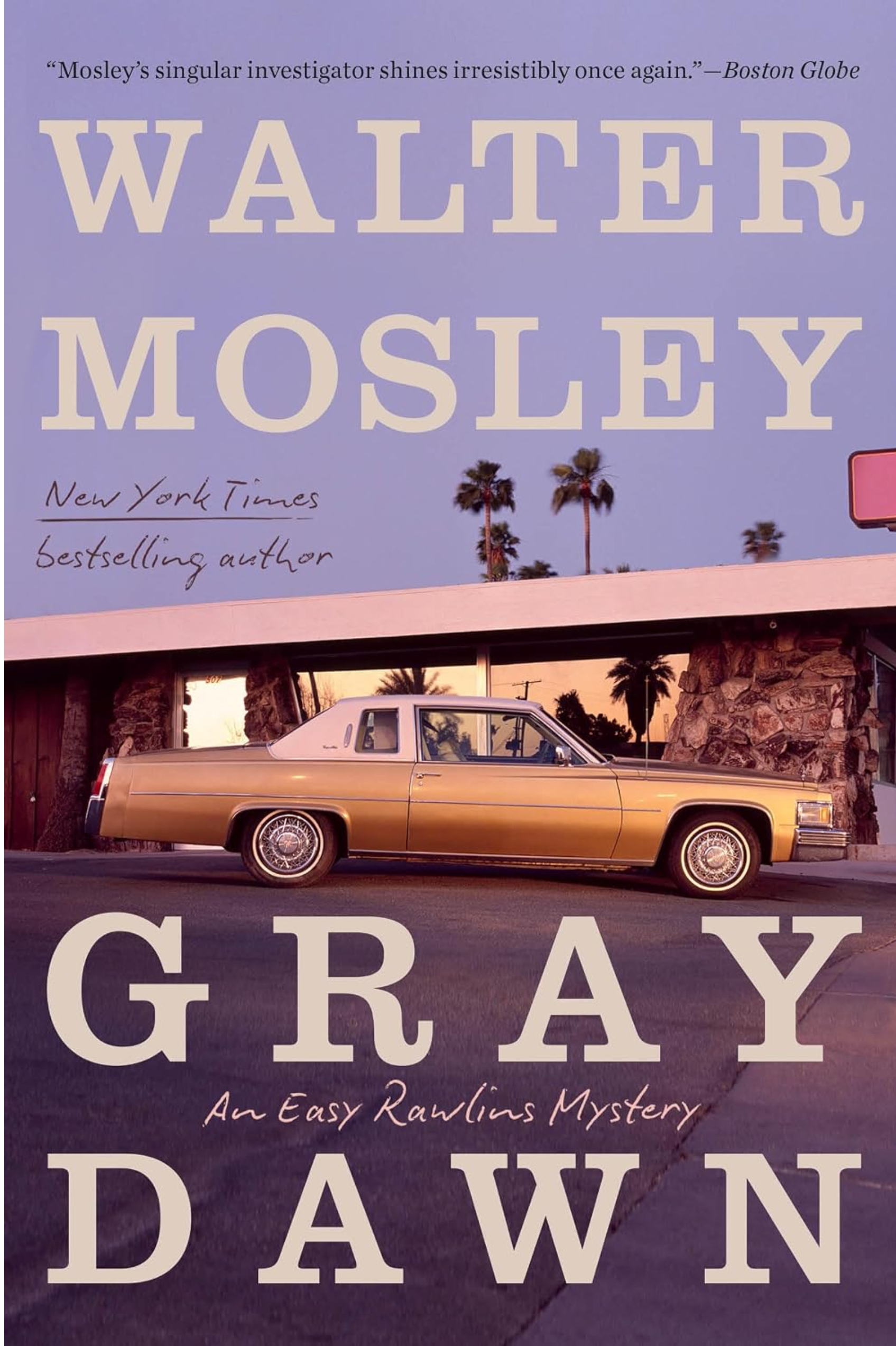
Like his contemporaries, Raymond Chandler’s Philip Marlowe and Ross Macdonald’s Lew Archer, Walter Mosley’s signature creation, Easy Rawlins, began his fictional life in 1940s Los Angeles. However, unlike Chandler and Macdonald, who began writing about their detectives at roughly the same time their fictional adventures were set, Mosley wrote his first Rawlins novel, Devil in a Blue Dress, which was set in 1948, over 40 years later. Since then, Mosley has aged World War II vet Rawlins by a couple of decades, but his most recent Rawlins tale, Gray Dawn, is set in the early 1970s. That choice didn’t merely reflect a fascination with the past, as with some historical fiction writers. Instead, as Mosley explains in an introductory note to Gray Dawn, his choice of time settings allows him to show what life as a Black man was like in that era. The Civil Rights Act was the law, but even in Los Angeles, a Black man like Rawlins had to be constantly aware of how his actions would be viewed through the racial lens of white society. Because of Mosley’s choices, Gray Dawn is a fascinating historical study and a solid detective novel.
Gray Dawn appears to take place in 1973, although the author never specifies an exact date. Life is easy for Easy Rawlins as he
lives in semi-retirement in a posh gated enclave in the hills, courtesy of a very grateful, very wealthy white client. Out of boredom, he shows up for work at his detective agency one day and takes the case of a scruffy-looking Black man looking for his aunt, Lutisha James, who disappeared recently. As Rawlins investigates, James’s trail leads to the estate of a wealthy white widow, where the missing woman had gone to work as a domestic. Rawlins doesn’t find James at the estate, but he does find the bodies of three other residents of the home, killed in an apparent home invasion gone bad.
The mystery surrounding those murders is good, although the author waits until two-thirds of the way through Gray Dawn before Rawlins resumes his search for the missing James in earnest. Before that, he’s involved in several unrelated subplots, including his efforts to train his secretary to become a private investigator. Rawlins also has to help his son, a fishing boat captain, who gets involved with some crooked federal agents in a drug-smuggling scheme. Normally, I don’t approve of authors trying to pad what should be a shorter work to novel length by the addition of unrelated storylines. However, Gray Dawn isn’t just a story of a private investigator trying to solve three gruesome murders while searching for a witness who has understandably gone to ground. Other authors could have placed a white investigator in the same situation as Rawlins and eventually entertainingly solved the case.
Instead, Gray Dawn is the story of a streetwise Black man trying to make his way through a post-Watts-riots Los Angeles and do his job without getting killed or thrown in jail for years. That task is far easier said than done, since Rawlins encounters cops at crime scenes who assume his guilt simply because of his race. Each time, he first thinks about what he must do to avoid personal disaster. Similarly, he has a humiliating encounter with a security guard in the lobby of a swanky office building. His task is to figure out how to gain access to an upper-floor office in a building where he “doesn’t belong” for an interview with a vital witness. As the author points out, a white investigator wouldn’t have the problems Rawlins does. However, the author makes his sociological points not in a strident, political manner, but in the same low-key way Rawlins faces them. The murder mystery’s eventual solution involves matters of class distinction as well as the racial issues Rawlins faces. Again, the author brings the issues to the attention of readers without becoming overbearing.
Gray Dawn is the first Rawlins novel I’ve read, and I was at a bit of a disadvantage here because the author includes many characters from previous books in significant roles. Although I occasionally got confused about who some characters were, I could follow the storyline fairly easily. My task was somewhat simpler in this regard because these characters were integral parts of the various subplots and storylines at play here. The author didn’t add these storylines for padding; instead, they formed an integral part of his examination of Black street life of the era. Those storylines were, if anything, more interesting and entertaining than the central murder mystery.
Of course, I would never spoil the solution to the central murder mystery. However, Rawlins and readers eventually learn that the mystery of Lutisha James’s identity and whereabouts depends on two huge coincidences that I could never quite believe, even in the relaxed reality of mystery story plotting. Those revelations move the last few chapters of Gray Dawn in an unexpected and unsatisfying direction. The information Rawlins learns will affect future novels in the series, but this book would have worked just as well without the surprises.
Readers like me who have never read an Easy Rawlins novel before may prefer starting with one of the author’s earlier books. However, Gray Dawn works well on its own and provides a fascinating picture of race relations in Los Angeles in the 1970s without turning into a lecture. The book is an excellent mystery featuring an exciting shootout towards the end and several other entertaining set pieces. Walter Mosley has taken Easy Rawlins through three decades of Los Angeles history without missing a beat. Readers will enjoy being along for the ride in this story as well.
NOTE: The publisher graciously provided me with a copy of this book through NetGalley. However, the decision to review the book and the contents of this review are entirely my own.
In this clip, author Walter Mosley discusses Gray Dawn with Patrick Millikin at the Poisoned Pen Bookstore:
Read other reviews of Gray Dawn:
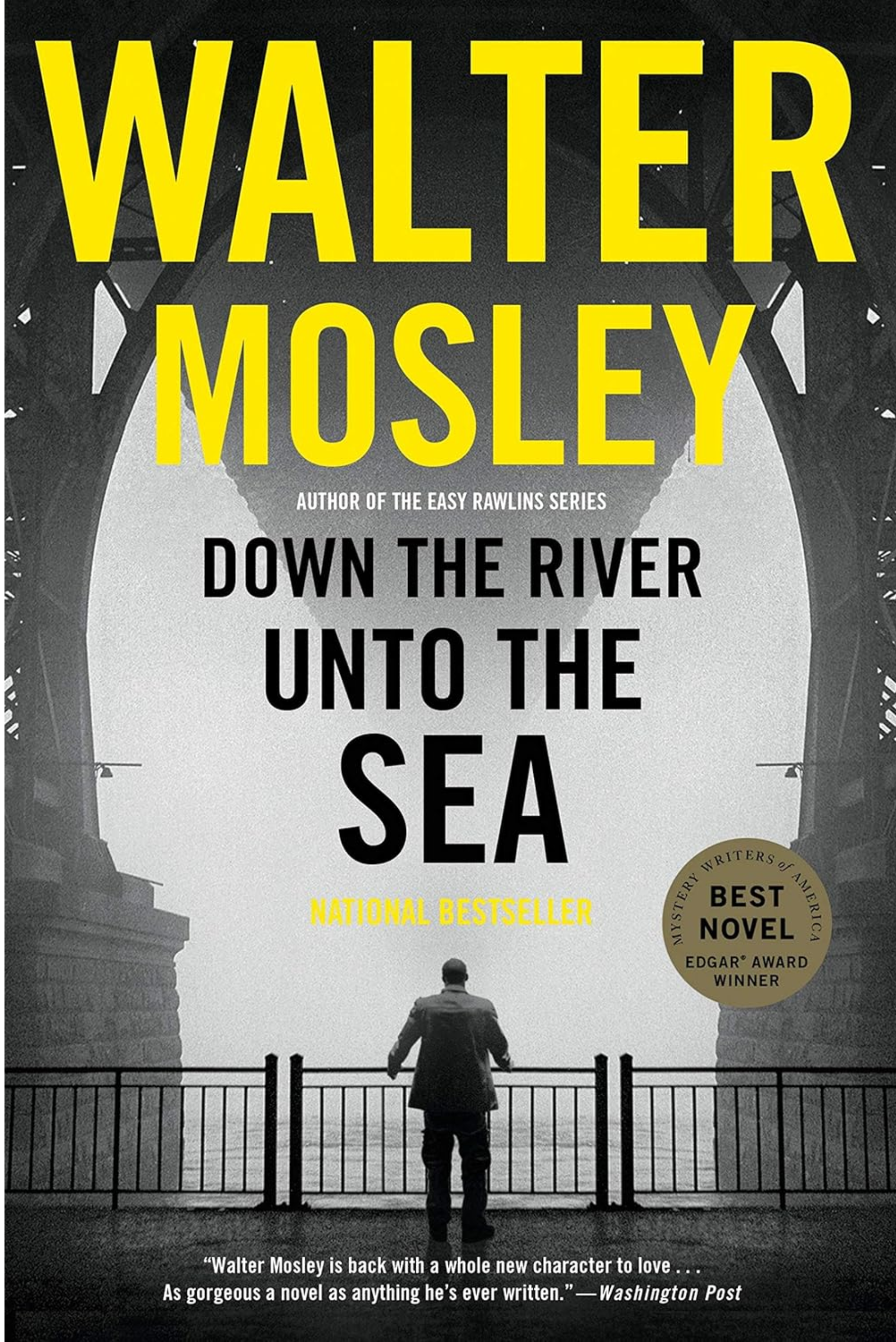
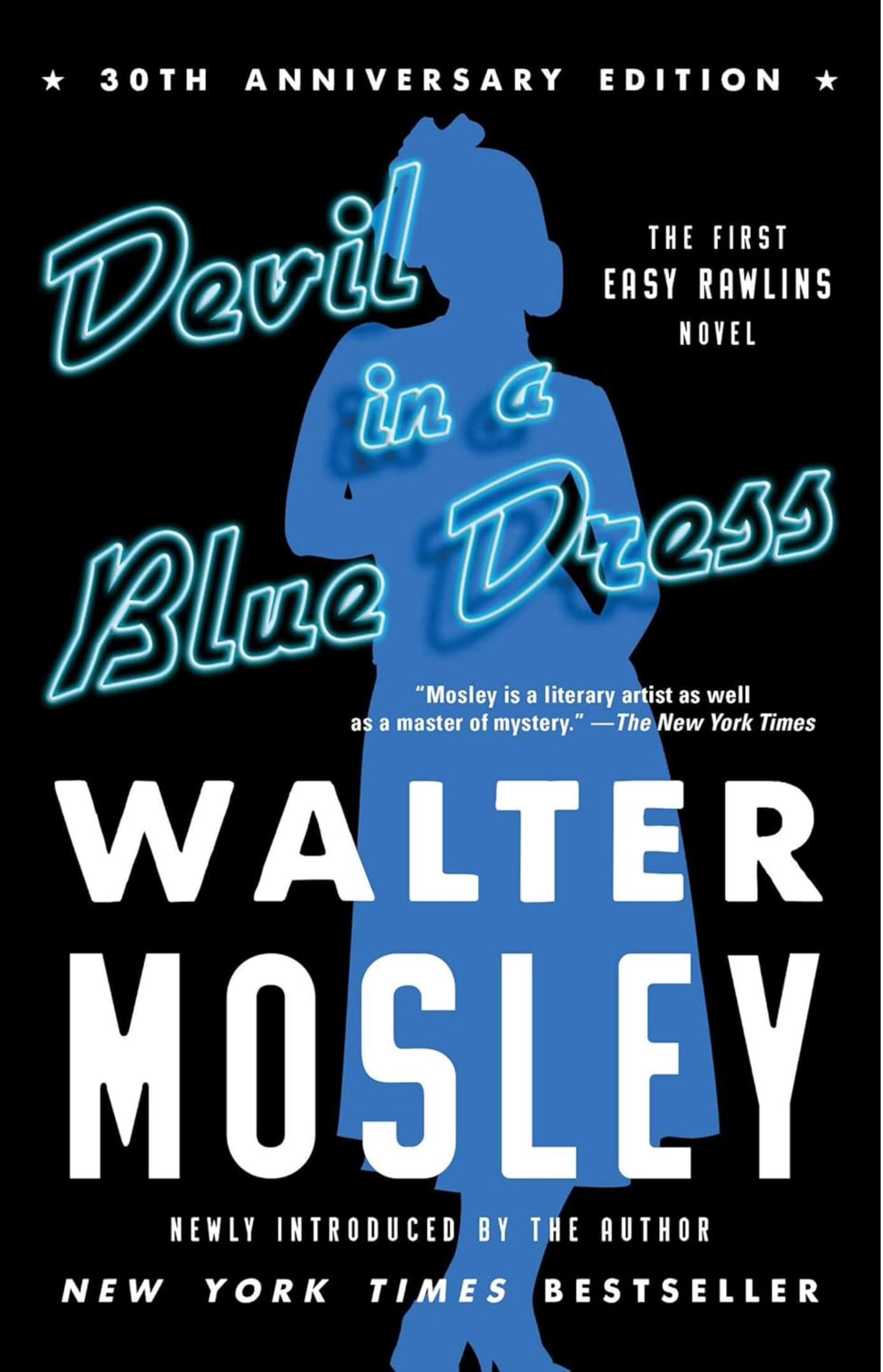
Walter Mosley is the author of more than sixty critically acclaimed books that cover a wide range of genres and forms, including fiction (literary, mystery, and science fiction), political monographs and writing guides. His first novel, Devil in a Blue Dress, introduced his most popular series character, Easy Rawlins, and 16 others have followed. Devil in a Blue Dress was adapted into a movie starring Denzel Washington as Easy Rawlins. Down the River and Unto the Sea, the first novel of his series featuring Joe “King” Oliver, won the 2019 Edgar Award for Best Novel. Rawlins has written other series featuring Leonid McGill, Socrates Fortlow, and Fearless Jones, as well as over 40 standalone works. He is a member of the New York Writers Hall of Fame and was named a Grand Master by the Mystery Writers of America. In 2023, Mosley received the Diamond Dagger from the Crime Writers’ Association for lifetime achievement.
Buy other books by Walter Mosley on Amazon:

Header Photo: "Riot Radio" by Arielle Calderon / Flickr / CC By / Cropped
Silver Screen Video Banner Photos: pedrojperez / Morguefile; wintersixfour / Morguefile
Join Button: "Film Element" by Stockphotosforfree
Twitter Icon: "Twitter Icon" by Freepik
Facebook Icon: "Facebook Icon" by Freepik
LinkedIn Icon: "LinkedIn Icon" by Fathema Khanom / Freepik
Goodreads Icon: "Letter G Icon" by arnikahossain / Freepik
Certain images on this site appear courtesy of Amazon.com and other sponsors of Silver Screen Videos for the purpose of advertising products on those sites. Silver Screen Videos earns commissions from purchases on those sites.
© 2026 Steven R. Silver. All rights reserved.
