Silver Screen Library
Miss Winter in the Library with a Knife by Martin Edwards - Review

Follow Us:






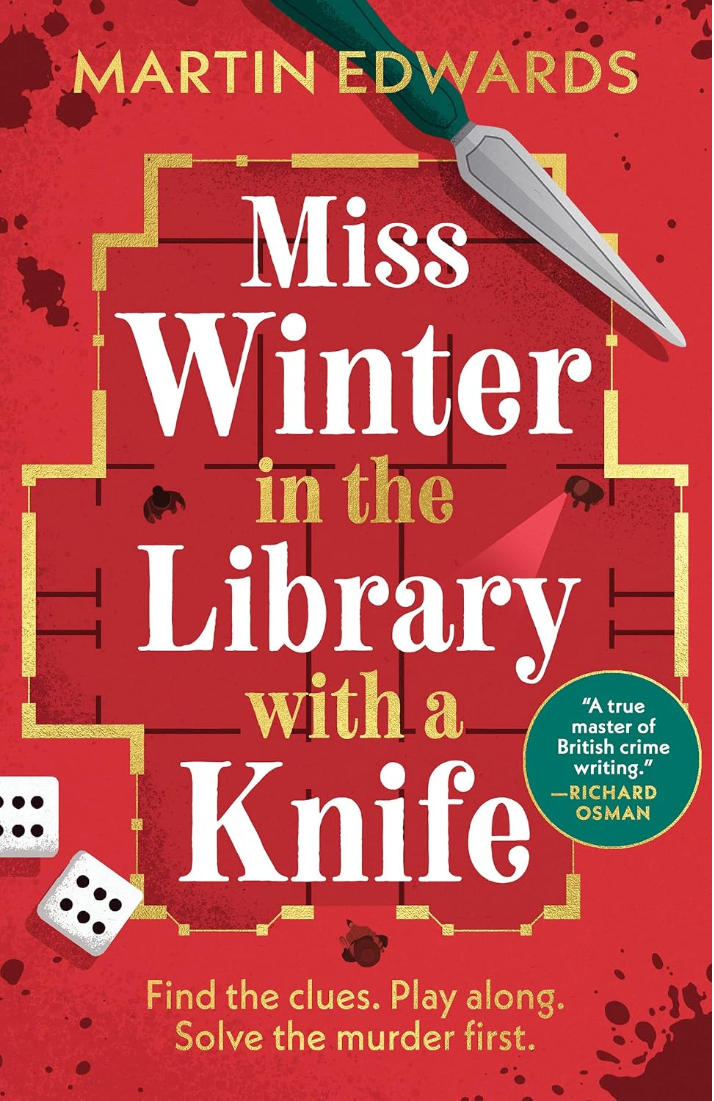
Since its introduction in 1949, Clue has become one of the world’s most familiar and popular board games. It has spawned a cult favorite movie, a stage musical, a book series, and several spinoffs and variants. So, it’s no surprise that anyone seeing the title of Martin Edwards’s new mystery, Miss Winter in the Library with a Knife, will immediately think of the game and assume the book is related. They’d be half right. The book features some of the same type of mystery gamesmanship found in the board game, but it’s a standalone novel with a more complex plot. That duality is both a highlight and, at times, a drawback.
The author structures Miss Winter as a “solve-it-yourself” type of mystery. An introductory chapter entitled “Rules of the Game” informs readers they are participating in a mystery along with six “players” who are already on their way to the remote English town of Midwinter. The game organizers prepared a murder mystery game similar to what mystery dinner theaters stage. Both players and readers must review the bios they have been provided for the various “suspects” and solve puzzles like coded messages to figure out the killer’s identity. The first player to solve the game wins a large cash prize.
However, Miss Winter is more than an exercise for readers to watch a staging of a silly murder mystery game. (I solved the fictional murder case rather easily.) It’s a complex mystery within a mystery. Midwinter, the site of the game, is a former mining community abandoned decades ago when the mines played out. The charitable Midwinter Trust now owns the land and has transformed it into a wellness center where overly stressed people can come to recuperate. Unfortunately, the recuperation didn’t go well for one guest five years earlier, who died in a freak accident. Since then, the Trust’s reputation has suffered, and they are now staging this game over Christmas to rehabilitate it. Besides the six players, another half-dozen Trust staff members are on hand to meet the players’ needs and run the game.
Before the game starts, another massive snowstorm hits, isolating everyone in the village from the outside world. (I didn’t know there was any place in Great Britain that was subject to this type of weather.) Naturally, the storm also knocked out the power and Wi-Fi service. It wouldn’t be much of a murder mystery game if there weren’t an actual murder to solve, and, sure enough, someone who wanders out of the building in the middle of the night turns up dead. (Mystery buffs will immediately notice the similarity of this storyline to the setup of Agatha Christie’s classic novel, And Then There Were None.) The Midwinter Trust staff thinks that the death is an unfortunate accident, but anyone reading “Miss Winter” knows better.
Based on the promotional materials I received about Miss Winter, I expected the entire story would be the type of murder game mystery suggested in the introductory chapter. I was wrong. This book is far more complex, with a complicated backstory that the author gradually reveals to the readers. The final chapters, which reveal the ultimate truth, include surprises and twists that make sense in the larger picture. (I’m being somewhat vague here to avoid spoilers.) If the author had eliminated the mystery-within-a-mystery gimmick and structured the story as a straightforward thriller, it would have been excellent.
To that end, the book’s characters feel like real people, not game tokens. All six players are involved in the 21st-century publishing industry in some fashion (one is a podcaster), and they have all suffered recent career setbacks and could use the prize money. The author shifts the story’s point of view from chapter to chapter, but most chapters take the form of a journal kept by one player, Harry Crystal. He’s the author of 32 poorly selling mysteries whose sole selling point is that their titles, such as Strangers on a Plane, sound like far more famous mysteries. Fortunately for readers, his narration is more character-revealing and detailed (clue-filled) than his titling device. Simply put, Harry’s a mess who is trying to put his life and career back together. Whether his career resuscitation involves a murder or two is something readers will have to figure out for themselves.
The author uses several other narrative devices besides Harry’s journal. Some chapters are told in the third person from the point of view of the Midwinter Trust staff. The author also includes excerpts from another player’s journal, copies of newspaper articles, press releases, the Trust’s promotional blurbs, and even maps of the property drawn by some of the staff members. The practical effect of the shifting information is to give readers access to a far more complete idea of what’s taking place at Midwinter than they could glean from following the thought processes of a struggling writer with no electrical power and no access to research material. I found the author’s device unusual but highly effective.
However, the author’s insistence on maintaining the game-within-a-game premise is also the biggest drawback of Miss Winter. I found it hard to believe that the players would be able to blithely carry on with solving the murder game right after they’ve found a dead body. Instead, everyone behaves as if the corpse were merely part of the larger game. Also, as in many similar books, the supposedly sophisticated characters here lose credibility when they carry on in a way that virtually invites further mayhem. (How much wandering in the snow at night are people going to do in sub-zero weather?) The biggest problem with the storytelling is the author’s insistence that the entire book is merely a game. He includes a detailed “Cluefinder” at the end that shows exactly when and how he reveals each relevant clue. I actually enjoy mysteries with similar explanations, but I don’t appreciate the author asking readers to grade themselves on how many clues they actually found. (HINT: I didn’t find many of them or figure out the guilty party or parties.)
Miss Winter in the Library with a Knife is an ingenious murder thriller with an intriguing backstory that’s far too sophisticated and clever to serve as the mere backdrop of a game between the author and his readers. Martin Edwards is one of the leading authorities on British Golden Age mysteries of the 1930s. Many of those mysteries were nothing more than clever puzzles. Miss Winter follows all the genre’s rules, but the book’s meta-structure impedes some of the best plot twists. I enjoyed Miss Winter in the Library with a Knife, but I would have enjoyed the book more if Miss Winter had used her knife to cut away the novel’s pointless murder game.
NOTE: The publisher graciously provided me with a copy of this book through NetGalley. However, the decision to review the book and the contents of this review are entirely my own.
In this clip, author Martin Edwards discusses Miss Winter in the Library with a Knife with Barbara Peters at the Poisoned Pen Bookstore:
Read other reviews of Miss Winter in the Library with a Knife:
Martin Edwards is a British crime novelist, editor, and non-fiction writer. He has written eight Lake District novels, eight Harry Devlin novels, five Rachel Savernake novels, and three standalone novels, the most recent of which is Miss Winter in the Library with a Knife. Edwards has also edited over 50 crime fiction anthologies, many of them for the British Crime Library series, for which he serves as a consultant.
In 2020, Edwards was awarded the Diamond Dagger by the Crime Writers’ Association. He was also the longest-serving Chair of the CWA since its founder, John Creasey. In 2015, Edwards was elected the eighth President of the Detection Club; his predecessors included Agatha Christie and Dorothy L. Sayers. Edwards also has a first-class honors law degree and is a qualified solicitor.
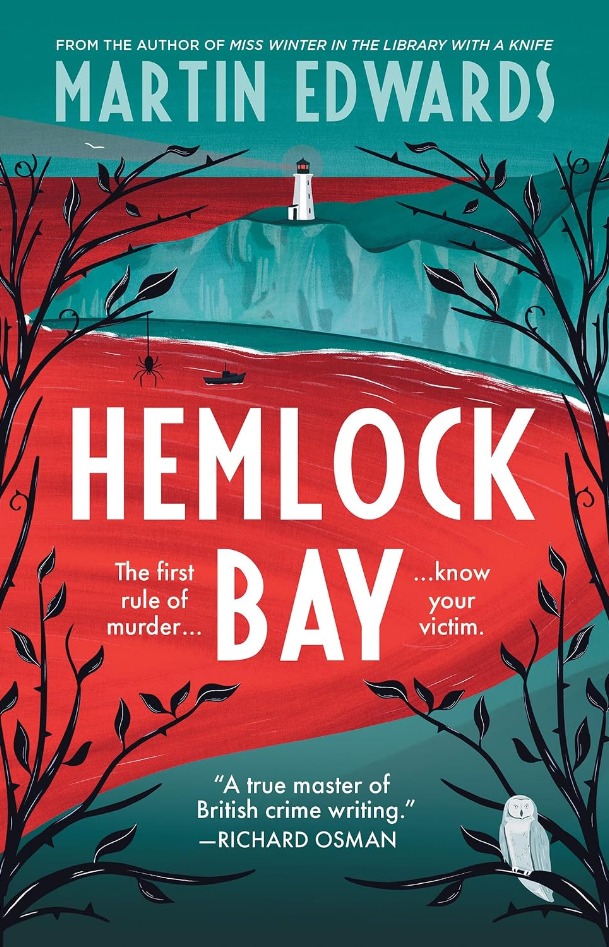
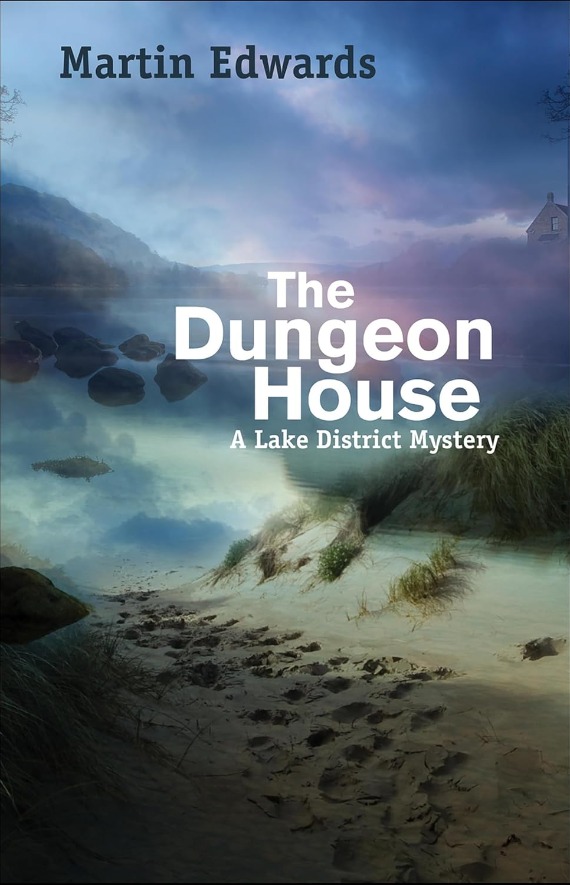
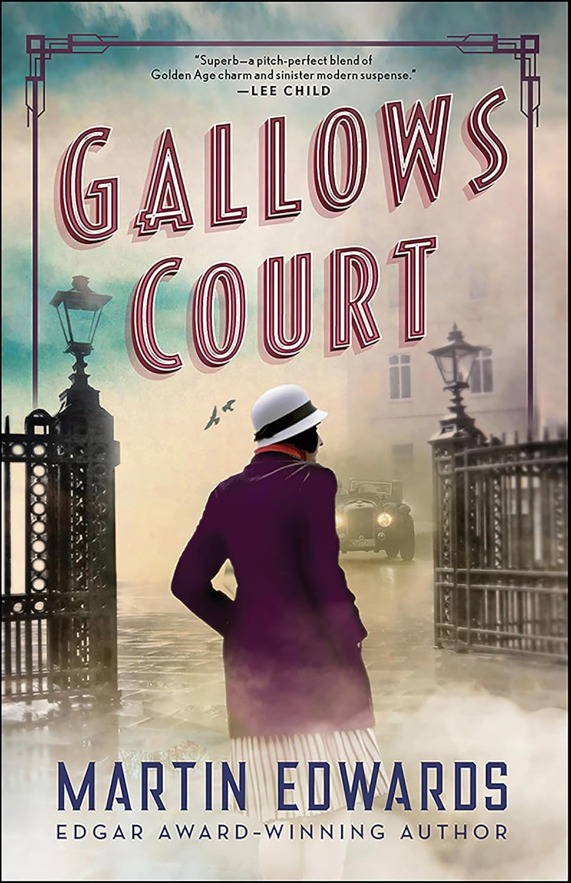
Buy other books by Martin Edwards on Amazon:
Header Photo: "Riot Radio" by Arielle Calderon / Flickr / CC By / Cropped
Silver Screen Video Banner Photos: pedrojperez / Morguefile; wintersixfour / Morguefile
Join Button: "Film Element" by Stockphotosforfree
Twitter Icon: "Twitter Icon" by Freepik
Facebook Icon: "Facebook Icon" by Freepik
LinkedIn Icon: "LinkedIn Icon" by Fathema Khanom / Freepik
Goodreads Icon: "Letter G Icon" by arnikahossain / Freepik
Simon Brett: "Simon Brett" (cropped) by annie_c_2 / Flickr / CC BY-NC-ND 2.0
Certain images on this site appear courtesy of Amazon.com and other sponsors of Silver Screen Videos for the purpose of advertising products on those sites. Silver Screen Videos earns commissions from purchases on those sites.
© 2026 Steven R. Silver. All rights reserved.
