Silver Screen Library
Sherlock Holmes and the Real Thing by Nicholas Meyer by Simon Brett - Review

Follow Us:






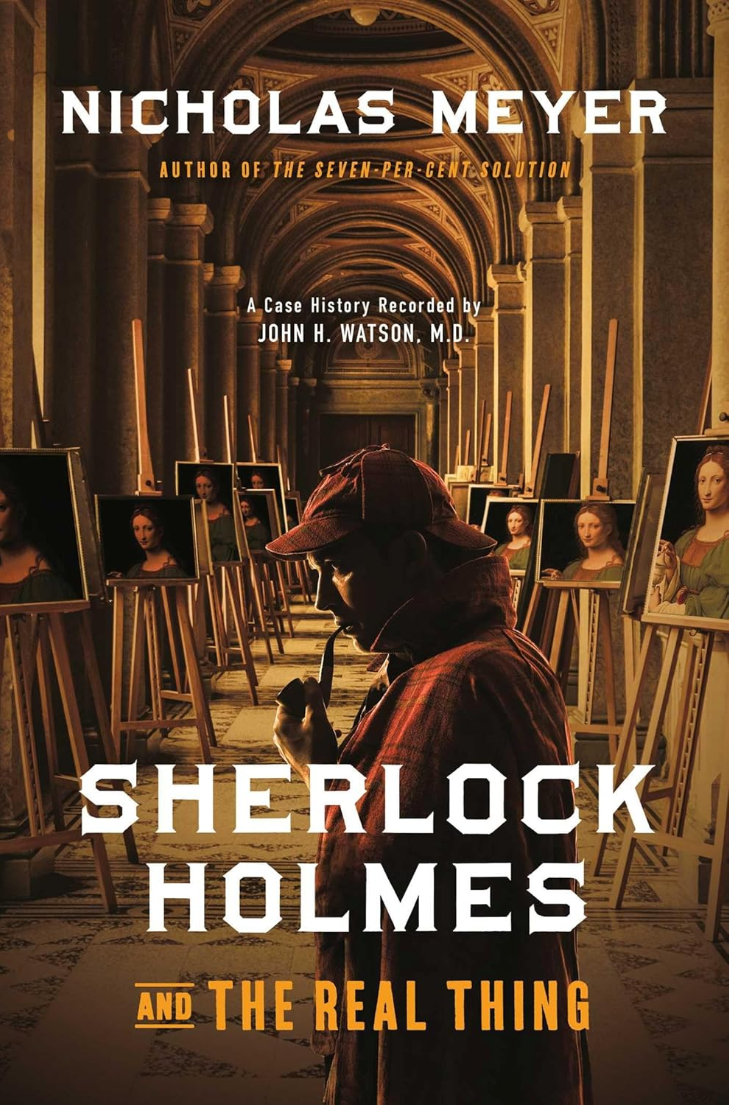
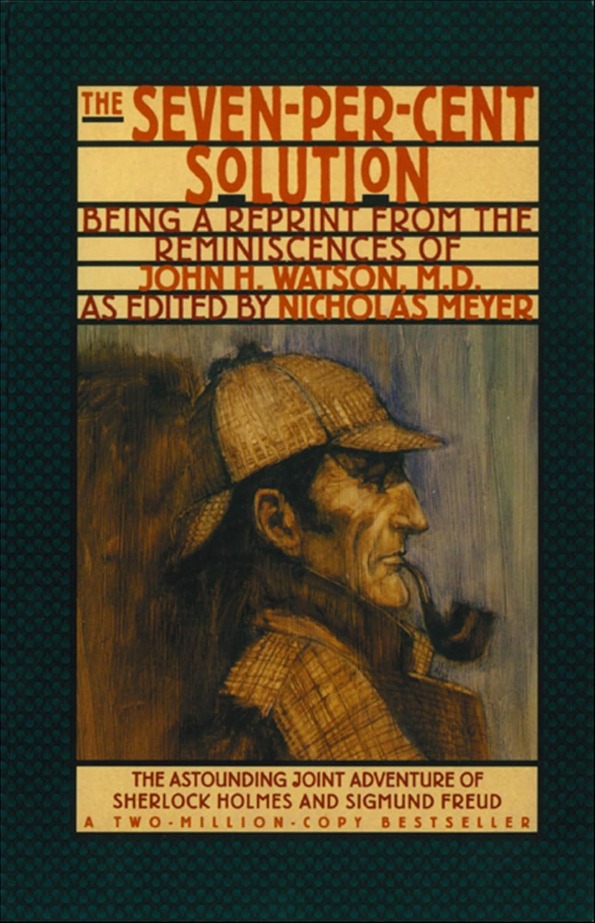
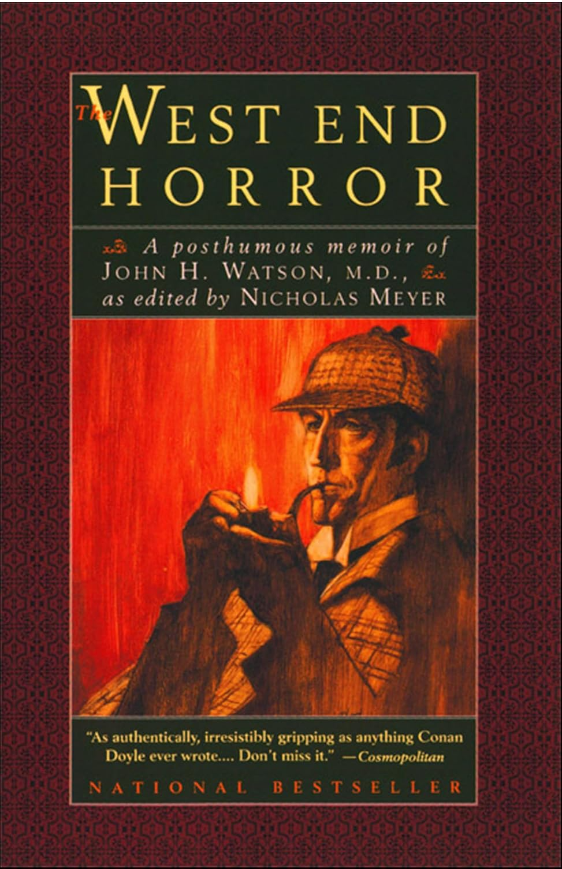
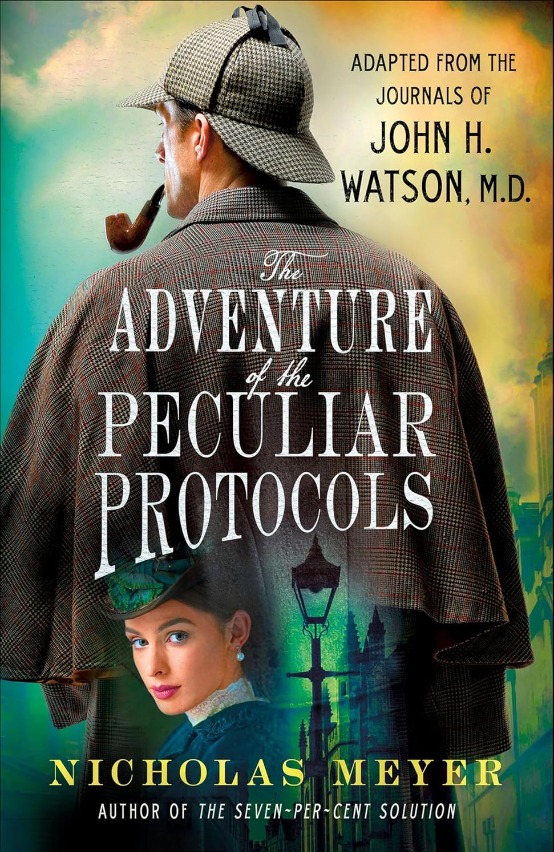
The most popular literary fictional character today is undoubtedly Sherlock Holmes. Dozens of new Holmes stories are published every year, even though Arthur Conan Doyle himself bid farewell to the character in 1927 (and died three years later). Because all the Holmes works and characters are now in the public domain in the United States, other authors are free to use or misuse the characters as they wish. Not surprisingly, these new Holmes stories vary widely in terms of literary and mystery quality and faithfulness to the Holmes canon. However, the best of the “new” Holmes authors is widely considered to be Nicholas Meyer, who wrote the best-selling The Seven-Per-Cent Solution in 1974 and has since written six more Holmes pastiches. His latest and probably last Holmes work is Sherlock Holmes and the Real Thing. The book remains faithful to the characters, but it’s of distinctly lesser quality because of its subject matter and some excessive padding.
In Sherlock Holmes and the Real Thing, Meyer maintains the premise from his other Holmes books that he has uncovered a hitherto-lost manuscript by Dr. Watson and merely edited it. He updates this premise for the social media era by having a 14-
year-old boy contact his website, claiming to have found an original Watson manuscript among old library books. Meyer verifies the boy’s claim, does some minor editing, and, thus, Sherlock Holmes and the Real Thing is born. I admire Meyer’s faithfulness to the Holmes oeuvre. His editing mostly consists of inserting footnotes that explain references to various people and places mentioned in the manuscript, including references to both other Doyle works and Meyer’s own previous Holmes stories.
Real Thing takes place in the late 1890s, shortly before the Boer War. Holmes agrees to take on what seems to be his most trivial case ever, helping a landlord track down a deadbeat tenant who abandoned his rented artist’s studio several months earlier and now owes considerable back rent. When Holmes and Watson visit the studio, they find evidence of a fight and bloodshed, leading Watson to believe that the artist was murdered. Shortly afterward, the artist’s body turns up in a highly unusual location, and a small claims rent case turns into a large-scale murder investigation.
Holmes and Watson soon learn that, in addition to creating his own works, the dead painter was involved in the practice of “art restoration” on behalf of one of London’s most prominent art dealers. Nicholas Meyer has carefully researched the practices of art restoration and forgery as they existed at the end of the 19th century. (Dating artworks to determine possible forgeries is a much more scientific and accurate process today than it was back then.) Unfortunately, the information he provides often comes in unwieldy dumps from Holmes or secondary characters. I found this material mildly interesting, but the frequent use of technical terms became confusing at times.
Real Thing has some other awkward passages. When Holmes and Watson visit the artist’s studio, Holmes carefully notes the significant findings he makes. However, for some reason, Watson later writes them all down again for no apparent reason other than to add a couple of pages to the book. Holmes also pays a visit to his brother, Mycroft, at the Diogenes Club, an exclusive club where Watson would not be welcome. So, Watson stays behind as Holmes consults Mycroft and then visits several art dealers. When he returns, he informs Watson of his findings in a lengthy, awkward monologue. The author could easily have imparted this information to readers in a less cumbersome manner.
The actual mystery is good, and its solution involves all the clues that Watson notes twice in the book. However, Holmes realizes that solving the murder is one thing, and proving guilt is another. So, he and Watson set a trap for the killer that involves hiding in an apartment in the same building where Watson first witnessed Holmes solve a killing shortly after they first met, nearly 20 years earlier. That coincidence leads Watson to reminisce about the pair’s first adventure, as outlined in Doyle’s A Study in Scarlet. It’s also one more example of unnecessary and draggy padding in the book. Sherlock Holmes and the Real Thing is a short novel, but I felt it originated as a novella that Meyer expanded to novel length. Unfortunately, the book would have been much crisper and livelier at 100 pages than at 200.
Real Thing also contains one significant personal development for the characters that will come as a surprise to most Holmes fans. It’s also one for which I can’t find any support in any of Doyle’s or Meyer’s other work. Meyer has taken liberties here that he hasn’t previously in his various pastiches. Whether Holmes fans will be pleased or angered is a matter of personal taste. In the book’s Afterword, Meyer hints that Real Thing will be his last Holmes pastiche. (As I write this review in 2026, Meyer is 80 years old.) That decision may explain his shaking up the Holmes canon. It does explain his use of the subject of art forgery as a backdrop for the book. While maintaining the conceit that he only edited Watson manuscripts, Meyer notes he has been accused of forging Watson’s “genuine” manuscripts. The meta-references to Meyer’s earlier Holmes pastiches are one of the book’s best touches.
Like Nicholas Meyer’s other pastiches, Sherlock Holmes and the Real Thing is faithful to the sound, feel, and relationships among the characters. It’s also a good mystery, worthy of the talents of Sherlock Holmes. However, readers’ enjoyment may depend to a large extent on their appreciation for fine art and the business of art dealership in the late 19th century (and their understanding of several technical terms). I felt the book had too much obscure technical material and other padding that diluted the entertainment value of what could be Nicholas Meyer’s swan song as a Sherlock Holmes “editor.” This book will be entertaining for Holmes fans, but it’s not quite the real thing.
NOTE: The publisher graciously provided me with a copy of this book through NetGalley. However, the decision to review the book and the contents of this review are entirely my own.
In this clip, author Nicholas Meyer discusses Sherlock Holmes and the Real Thing at the American Writers Museum:
Read other reviews of Sherlock Holmes and the Real Thing:
Nicholas Meyer has been an award-winning author, screenwriter, and director for over five decades. He is the author of seven Sherlock Holmes novels, including The Seven-Per-Cent Solution, in which Sherlock Holmes met Sigmund Freud. That novel sold more than two million copies, stayed on the New York Times bestseller list for forty weeks, and won the British Gold Dagger award from the British Crime Writers’ Association. Two years later, Meyer received an Academy Award nomination for his screenplay of the eponymous film, which starred Nicol Williamson, Robert Duvall, Alan Arkin, Vanessa Redgrave and Laurence Olivier. His non-Holmes novel, Target Practice, was nominated for an Edgar Award.
Meyer made his directing debut in 1979 with a film he wrote, Time After Time, starring Malcolm McDowell as H.G. Wells, Mary Steenburgen and David Warner as Jack the Ripper. He went on to direct Star Trek II: The Wrath of Khan, Star Trek VI, The Undiscovered Country, and ABC’s The Day After (1983), which is the single most-watched television film ever made (100 million viewers in one night), and was nominated for 14 Emmys.
Buy Nicholas Meyer books on Amazon:
Header Photo: "Riot Radio" by Arielle Calderon / Flickr / CC By / Cropped
Silver Screen Video Banner Photos: pedrojperez / Morguefile; wintersixfour / Morguefile
Join Button: "Film Element" by Stockphotosforfree
Twitter Icon: "Twitter Icon" by Freepik
Facebook Icon: "Facebook Icon" by Freepik
LinkedIn Icon: "LinkedIn Icon" by Fathema Khanom / Freepik
Goodreads Icon: "Letter G Icon" by arnikahossain / Freepik
Certain images on this site appear courtesy of Amazon.com and other sponsors of Silver Screen Videos for the purpose of advertising products on those sites. Silver Screen Videos earns commissions from purchases on those sites.
© 2026 Steven R. Silver. All rights reserved.
