Silver Screen Library
Sisters in Death by Eli Frankel - Review

Follow Us:






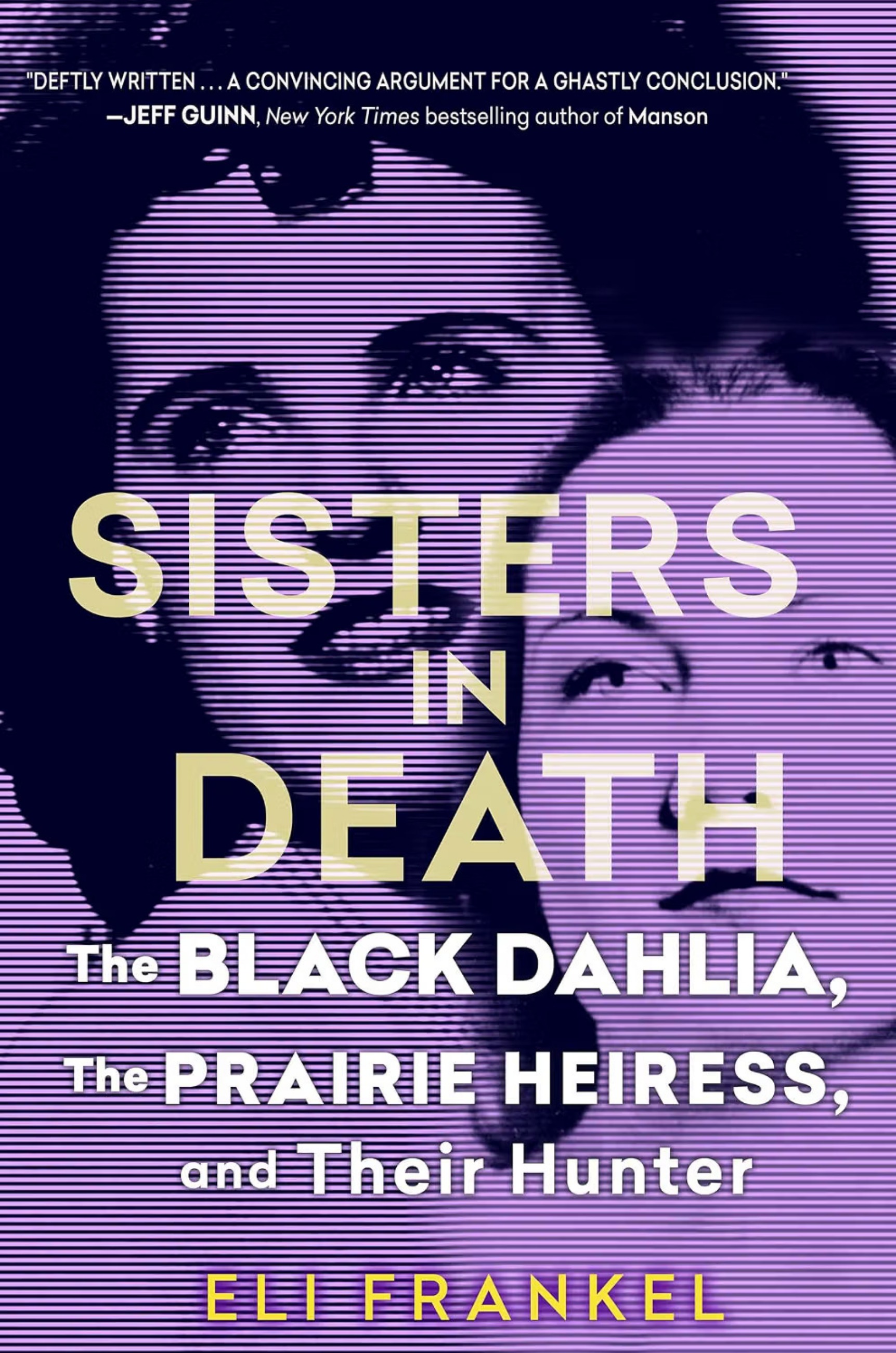
No unsolved murder case in American criminal history has captured the imagination of the public like that of Elizabeth Short, a 22-year-old woman whose dismembered body was discovered in a vacant lot in Los Angeles in 1947. Because of her distinctive hairstyle and affinity for wearing black clothes, Short was soon dubbed the “Black Dahlia,” and the name has stuck ever since. Theories and suspects abound as to Short’s killer, although, because of the passage of time, it is highly doubtful their actual identity will ever be conclusively proven. Many of these theories have inspired books, movies, and TV shows, each of whose creators claim to have found the correct solution to the case.
Veteran TV producer Eli Frankel is the latest to weigh in on the Black Dahlia case in his book, Sisters in Death. Besides “proving” his suspect was Short’s murderer, Frankel gives readers a bonus. He believes his killer, Carl Balsiger, also committed another brutal, highly publicized, still unsolved murder of a young woman named Leila Welsh in Kansas City in 1941. Regardless of whether Frankel is correct (which we will never know), he paints three separate, fascinating portraits of the killer and his victims.
In discussing Sisters in Death, I do not intend to analyze Frankel’s findings or compare them with other theories about the case. The Los Angeles police considered Balsiger a suspect and dismissed him. Other researchers and authors over the years similarly dismissed Balsiger. I’m no expert on the Short case, and I had never heard of Welsh or Balsiger before reading Sisters in Death. Since the book’s publication, others have both hailed and criticized Frankel’s findings. Instead, I will focus on the literary quality of Sisters in Death.
Some background is necessary. Leila Welsh was an attractive young woman from a well-to-do Kansas City family. She attended the University of Kansas City at the same time Balsiger was an upperclassman, and their families lived a few blocks apart. Welsh was beaten to death in her bedroom one night. The police investigation soon focused on Leila’s older brother, George, who lived in the same house and whose fingerprints were found on the windowsill where the killer gained access to the bedroom. Eventually, he was arrested and acquitted after a highly publicized trial. The Kansas City investigation went cold after that. After Short’s murder, the Los Angeles police discovered Short had spent a day with Balsiger a month before her death, and that she worked at the same Army base where Balsiger was stationed during World War II. However, they never established any further connections between the two.
The author divides Sisters in Death into three sections, concentrating on Welsh, Short, and Balsiger respectively. Balsiger is, at best, a minor character in the discussion of the Welsh murder. Instead, the investigation degenerates into a turf war between the Kansas City Police Department and the sheriff’s office. At the time, the remnants of the Pendergast Mob controlled organized crime in Kansas City and exerted considerable influence over the sheriff’s department. Their influence led to Welsh’s arrest, but the circumstantial case against him fell apart under skillful cross-examination at his trial. I found this section of the book the most fascinating. The influence of organized crime on police and prosecutors was far more open in that era than it is today. The author does a good job of covering the lead-up to the trial and explaining why the official investigation never went much further than George Welsh.
The author’s primary focus in discussing the Short case is on her life, especially during the months she spent in Los Angeles before her death. Most popular depictions of Short portray her as an aspiring actress or a woman of loose morals willing to sleep around to get ahead. Short dated extensively in the months before her death and lived for a while in the house of a well-known nightclub owner named Mark Hansen. However, the author contends she was just looking for romance and marriage. When she realized she wouldn’t find it in Los Angeles, she made plans to go back home to her native Boston but never raised enough money to do so. Finally, the author looks at Carl Balsiger. His story is that of a man who achieved his greatest success as a supply officer in World War II but went downhill afterward because of bad business decisions and romances, eventually becoming a petty criminal and con man.
The author researched Sisters in Death for five years and conducted extensive interviews. With one notable exception, all the significant characters in the murder cases were dead by that time. That one exception was Betty Bersinger, the woman who discovered Short’s body. Bersinger was over 100 years old when she granted her interview with the author. (Bersinger has since died.) The author readily accepts Bersinger’s version of events from over 70 years earlier because it fits his reconstruction of the case. Besides Bersinger, the author was able to interview several children and other descendants of those people to get second-hand descriptions of the events portrayed in the book. The result is an often fascinating study of the victims, the possible killer, and the surrounding circle.
Unfortunately, the author’s research often works to his disadvantage. In his effort to report everything he discovered, he occasionally goes into too much detail, devoting space to people whose connection to the major stories was tenuous at best. I became confused at times because of too much information being provided. At the same time, I would have liked to learn more about interesting characters like a 14-year-old girl who befriended and roomed with Short during her stay in Los Angeles (and who probably could have gotten a lot of men in big trouble under statutory rape laws). I also wish the author had included some pictures in the book. In my limited research, I found many pictures of Short, Welsh, Balsiger, the crime scene, and other pertinent images. A brief photo section would have made the book feel more relatable to readers.
The author’s writing style is somewhat mixed here. When discussing factual matters like George Welsh’s trial, the author is concise and informative. However, at other times, he waxes romantic, as if providing the voiceover for a docudrama. For example, he writes: “Through it all and into the modern day, the real Beth Short became a useless distraction from the tawdry noir figure that would define the narrative.” A little of that language goes a long way.
Regardless of whether readers accept the author’s theory of these murders, Sisters in Death is an intriguing look at a bygone era in America before and after World War II. I learned a great deal about fascinating matters on the periphery of the cases, like the Pendergast Mob’s involvement. Sisters in Death won’t be the last word on the Short case, but it adds another fascinating piece to a puzzle that will never be solved.
NOTE: The publisher graciously provided me with a copy of this book through NetGalley. However, the decision to review the book and the contents of this review are entirely my own.
In this clip, author Eli Frankel discusses Sisters in Death with Patrick at the Poisoned Pen bookstore:
Read other reviews of Sisters in Death:
Eli Frankel is a television and documentary production company owner, Emmy-nominated executive producer, network executive, showrunner, editor, camera operator, writer, and director of multiple series for broadcast television, cable television, and streaming networks. His credits include MGM/Epix’s definitive Charles Manson documentary series Helter Skelter, Netflix’s Emmy-nominated Skin Decision, Revenge Body with Khloe Kardashian, American Chopper, Survivor, Amazing Race, and many other series. Frankel wrote, directed, and co-produced the feature film 21, which was selected for the Independent Feature Film Market at the New York Film Festival and won the Best Picture award at the Rhode Island International Film Festival. As an avid true-crime researcher and writer, he devoted more than five years to solving the mystery of who killed the Black Dahlia, which he details in his book Sisters in Death.
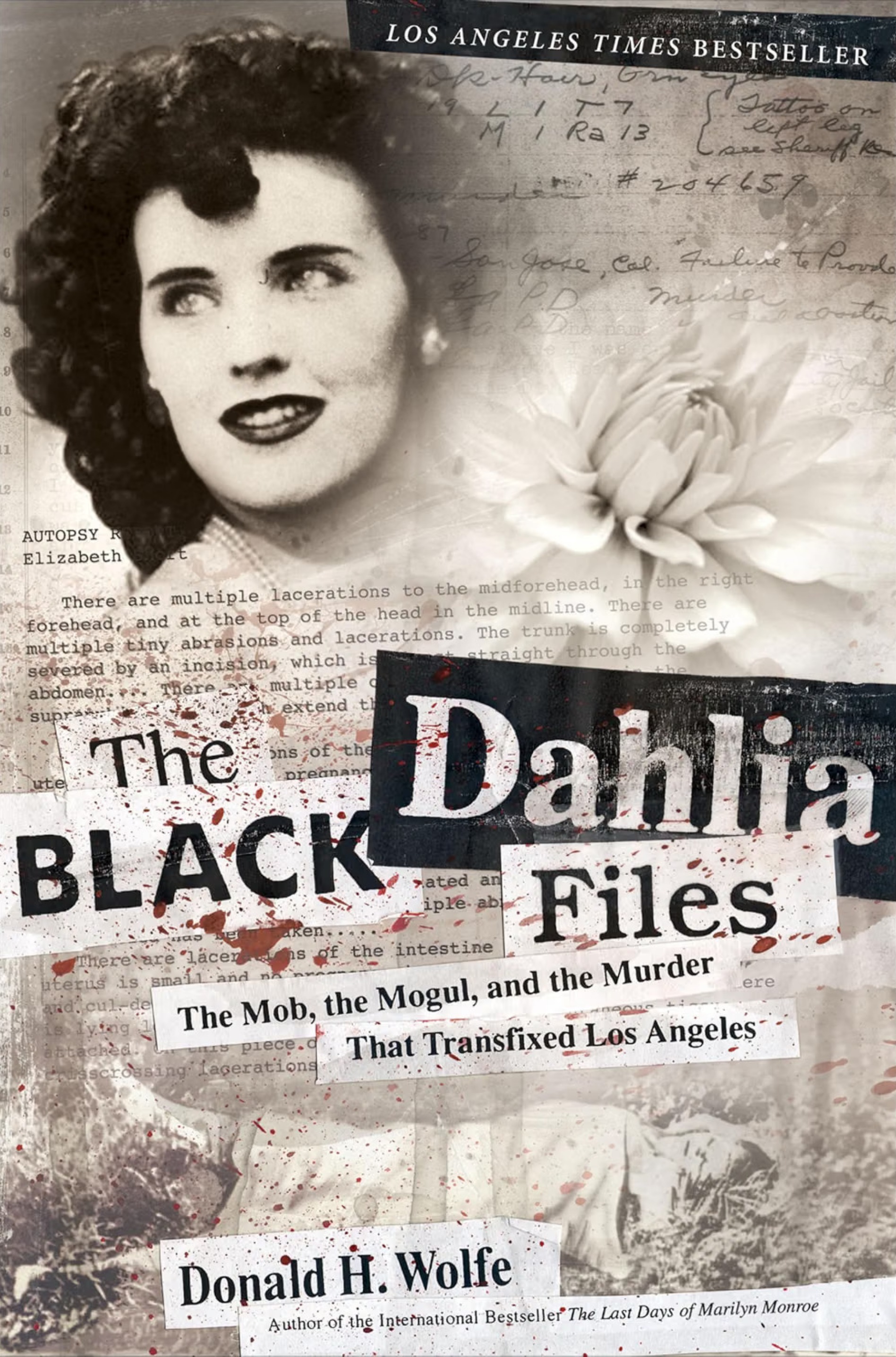
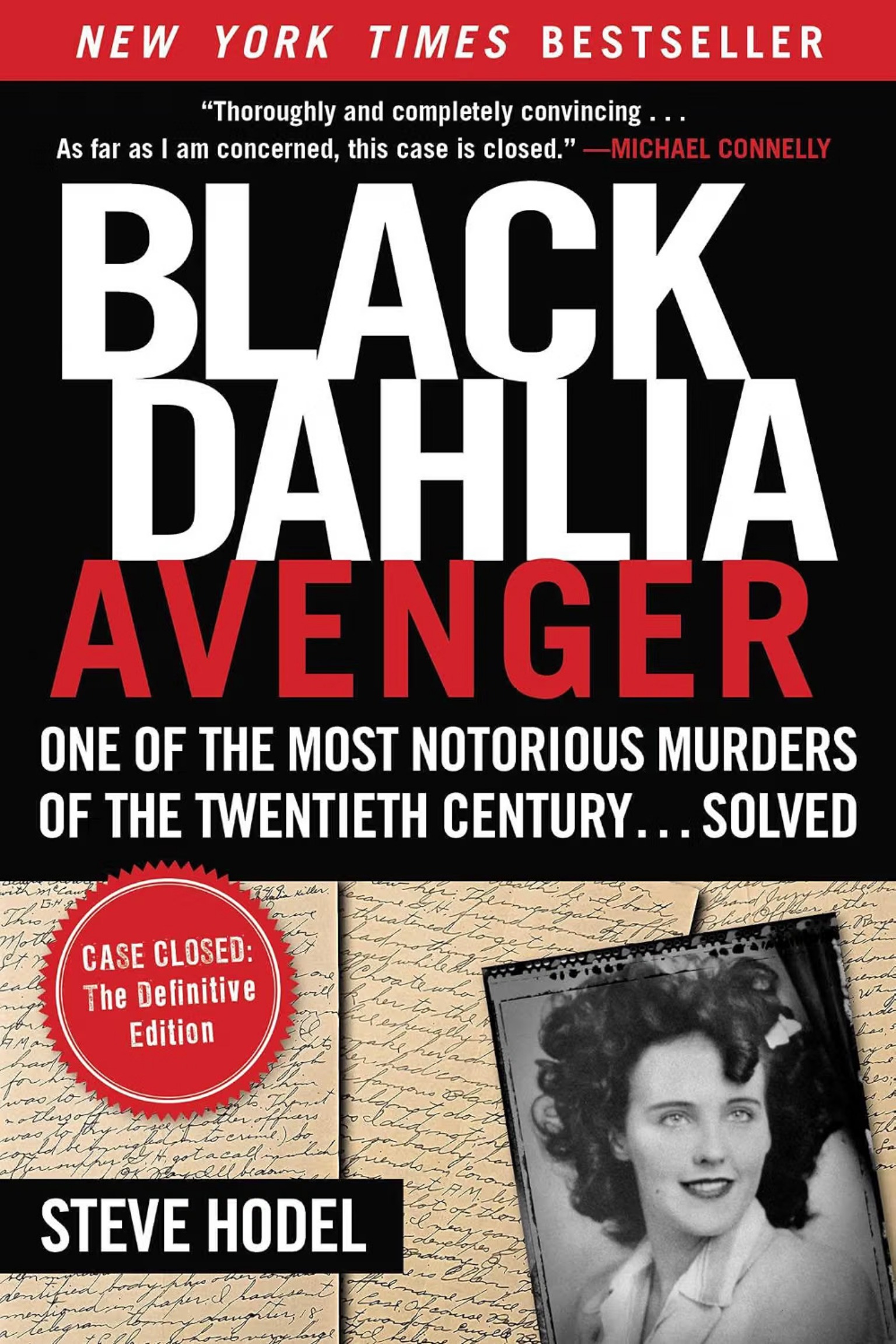
Buy other books about the Black Dahlia on Amazon:

Header Photo: "Riot Radio" by Arielle Calderon / Flickr / CC By / Cropped
Silver Screen Video Banner Photos: pedrojperez / Morguefile; wintersixfour / Morguefile
Join Button: "Film Element" by Stockphotosforfree
Twitter Icon: "Twitter Icon" by Freepik
Facebook Icon: "Facebook Icon" by Freepik
LinkedIn Icon: "LinkedIn Icon" by Fathema Khanom / Freepik
Goodreads Icon: "Letter G Icon" by arnikahossain / Freepik
Certain images on this site appear courtesy of Amazon.com and other sponsors of Silver Screen Videos for the purpose of advertising products on those sites. Silver Screen Videos earns commissions from purchases on those sites.
© 2026 Steven R. Silver. All rights reserved.
