Silver Screen Library
Willow Rose by M. Kevin Hayden - Review

Follow Us:






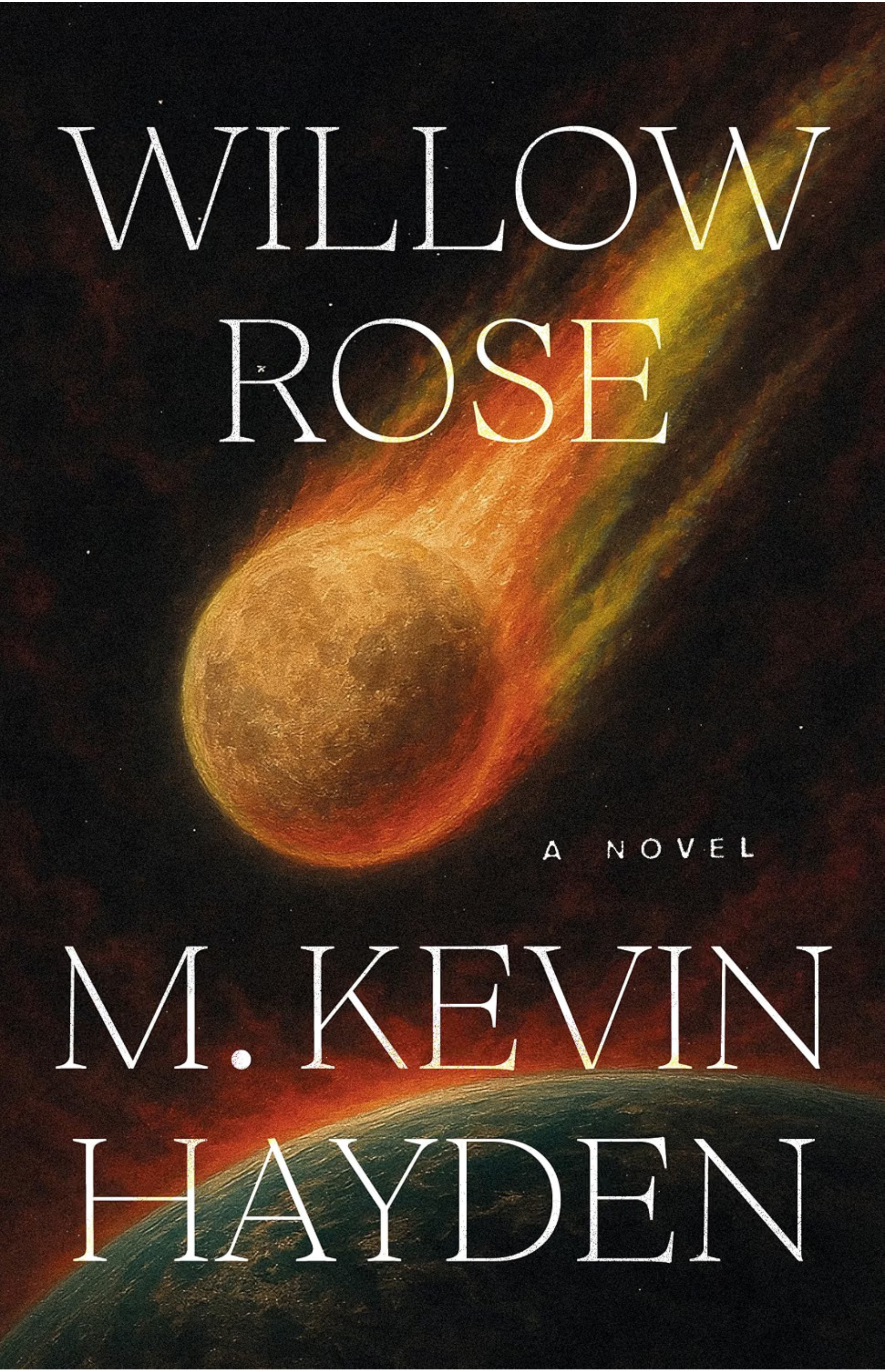
“Don’t ask; Don’t Tell” was the shorthand for an important government policy a few decades ago. That phrase is also shorthand for some authors’ writing styles. Their plots are intriguing but full of unexplained gaps that the author never bothers to address, instead rushing the reader to the story’s conclusion. That’s the case with Willow Rose, by M. Kevin Hayden, a quasi-science fiction, quasi-horror story that often confuses and confounds readers on its way to an exciting mid-winter showdown with a terrifying but poorly explained monster.
The protagonist of Willow Rose is Dr. Alder Peony, an emergency-room physician at a small hospital in remote northern Minnesota. He works 24-hour shifts under the terms of a contract that readers learn wasn’t entirely voluntary on his part. When not working, he lives in an even more remote one-room cabin in the woods. The year is 2005 (chosen by the author to predate much of today’s social media era). The world is still abuzz over the sudden, mysterious appearance of a comet a few days earlier, which is launching meteors towards Peony’s neck of the woods.
One day, after finishing his shift, a seven-year-old girl named Willow knocked on Peony’s door, followed by a woman claiming to be Willow’s mother, followed by… something weird. Willow’s mother soon disappears from the story, but Willow stays. She repeatedly tells Peony that they must stay together, or bad things will happen. Sure enough, bad things do happen in the form of the monster Peony glimpsed earlier, which follows him and Willow to the hospital.
A Native American patient whom Peony treated at the hospital a few days earlier dubs the creature a Windigo, a mythological creature from Native American folklore. The Windigo’s origin is never made clear in Willow Rose, nor is the comet’s origin, nor is Willow’s origin, although readers can make educated guesses about all three. They don’t need to guess at the Windigo’s destination, since most of the book’s second half is a showdown between the creature and Peony, Willow, and the few staff on duty at the hospital. Although much about the creature is a mystery, including its exact appearance, it has a chillingly unique style of killing its victims, which feeds into the mythology the author created.
The author does several things well in Willow Rose that lead to an effective final showdown. He gradually reveals the various facets of Peony’s personality, especially the reasons that led him to end up at a last-chance hospital in the middle of nowhere. The author also creates two reasonably detailed secondary characters, one of them a possible romantic interest, who help Peony at crucial times.
Unfortunately, although the author strives to make the final hospital showdown suspenseful, his worst stylistic quirk gets in the way. Willow Rose is barely 200 pages long, but it feels incredibly padded because the author repeatedly inserts irrelevant, nonsensical passages. These passages usually take the form of a series of one-sentence (or sentence fragment) paragraphs that confuse readers and dissipate suspense. For example, in this passage, Peony describes a peaceful feeling he has:
“Joy, unfiltered.”
“Love, limitless and engulfing.”
“Peace, so steady it feels motionless.”
“But peace is not passive. And never still.”
“It marches with a mightier step than the boots of any army.”
“Its course often invisible to worldly eyes—yet forever in motion, even in times of strife.”
I’m not quite sure what motionless peace feels like or, by contrast, what marching peace feels like. However, I didn’t have much time to puzzle through this passage, since the author goes off on a similar tangent on the next page describing Peony’s depression. Meanwhile, Peony is trying to fight off the Windigo. Readers may forget his external struggle because of these meditations.
Willow Rose has the makings of a great horror thriller in a remote, isolated locale. Unfortunately, the author juggles too many plot threads peter out, leaving readers with nagging, unresolved questions. Further, what could have been an enthralling final confrontation dissolves into a decent but often confused one. I’m giving Willow Rose a three-star rating and a mild recommendation. However, the author needs more work on his follow-through for a consistently enjoyable horror story.
NOTE: The publisher graciously provided me with a copy of this book through Booktrovert. However, the decision to review the book and the contents of this review are entirely my own.
In this clip, author M. Kevin Hayden discusses a previous book on the Old Soul Interview podcast:
Read other reviews of Willow Rose:
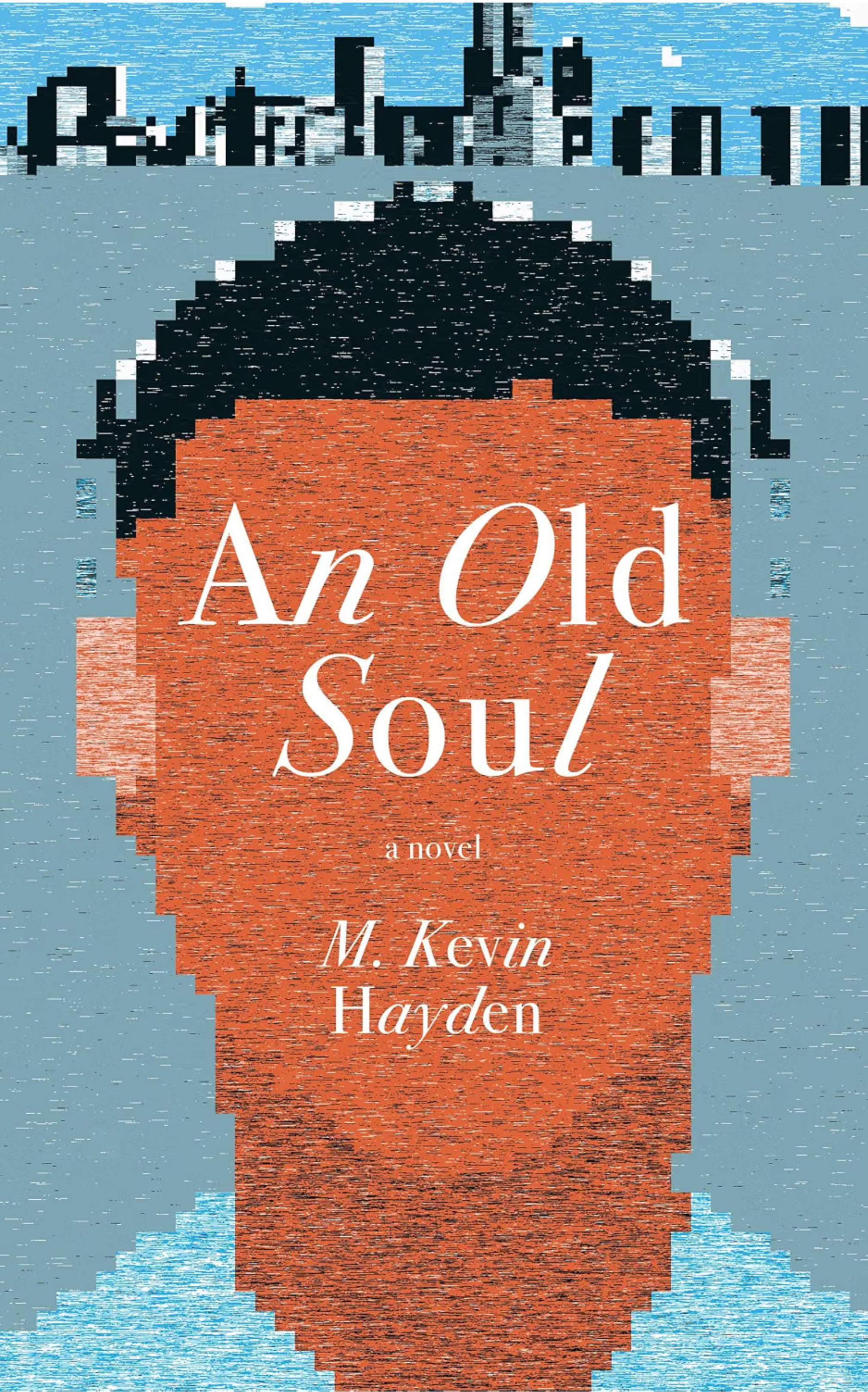
M. Kevin Hayden is a novelist from the South Side of Chicago. His debut novel, An Old Soul, is a tale of love and unraveling reality set in 1996 Chicago. His second novel, Willow Rose, leaves the city for the snowbound wilderness of northern Minnesota, where a weary doctor and a mysterious child confront an ancient cosmic terror.
Buy other books by M. Kevin Hayden and similar authors on Amazon:

Header Photo: "Riot Radio" by Arielle Calderon / Flickr / CC By / Cropped
Silver Screen Video Banner Photos: pedrojperez / Morguefile; wintersixfour / Morguefile
Join Button: "Film Element" by Stockphotosforfree
Twitter Icon: "Twitter Icon" by Freepik
Facebook Icon: "Facebook Icon" by Freepik
LinkedIn Icon: "LinkedIn Icon" by Fathema Khanom / Freepik
Goodreads Icon: "Letter G Icon" by arnikahossain / Freepik
Certain images on this site appear courtesy of Amazon.com and other sponsors of Silver Screen Videos for the purpose of advertising products on those sites. Silver Screen Videos earns commissions from purchases on those sites.
© 2026 Steven R. Silver. All rights reserved.
