Silver Screen Library
Worlds Collide edited by L. Andrew Cooper and H.J. Dutton - Review

Follow Us:





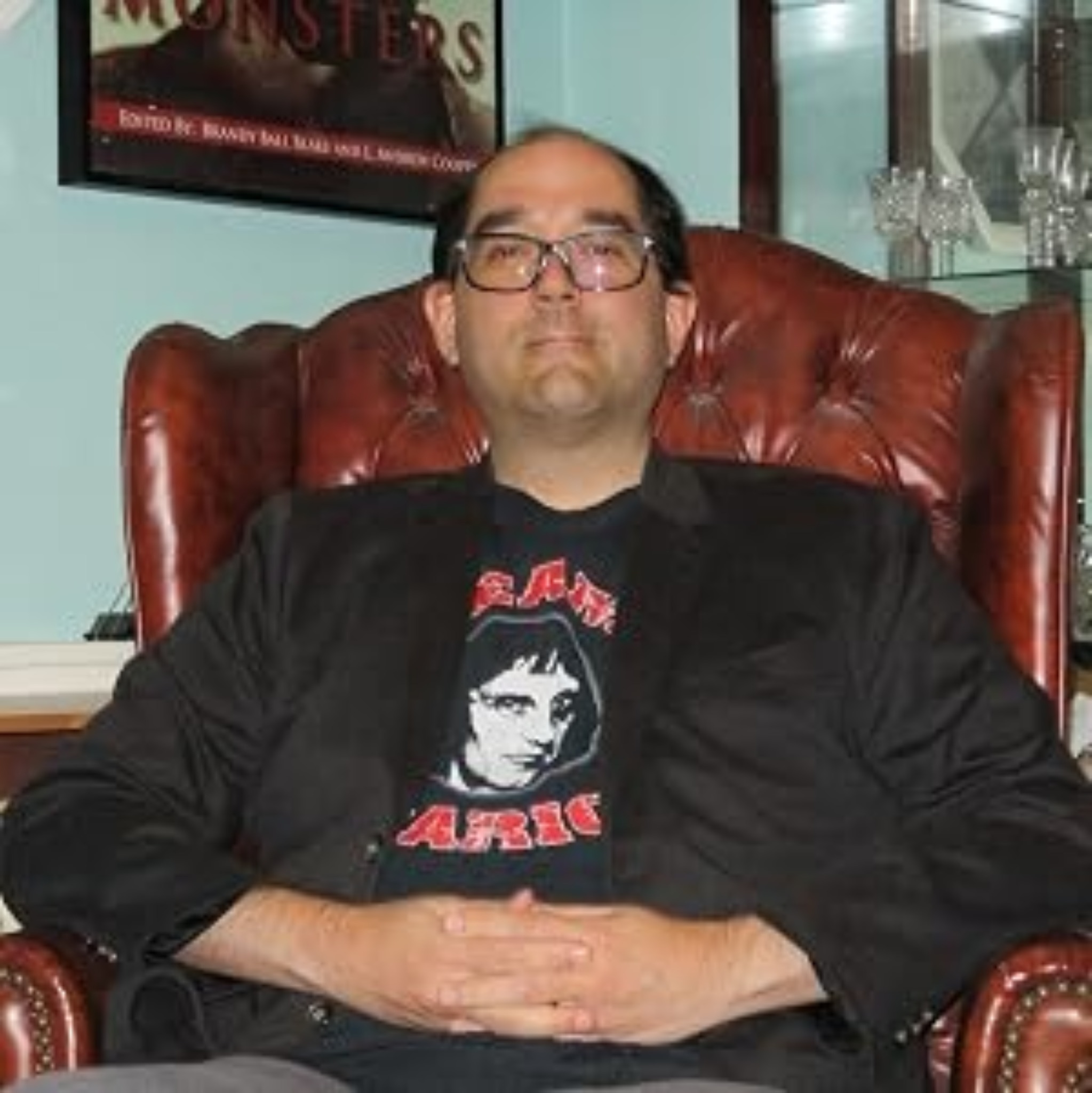
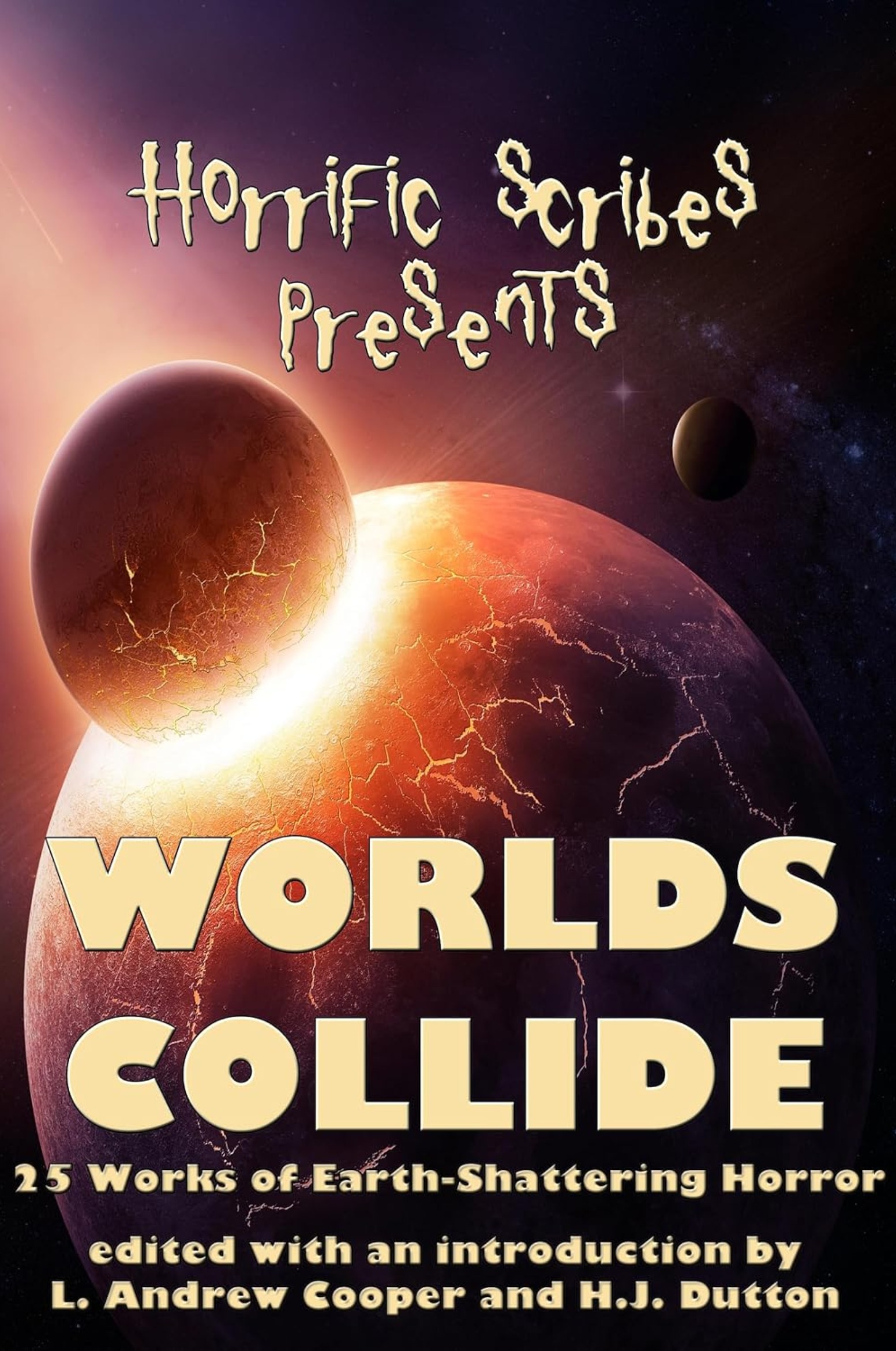
Reading a high-quality horror story by a genre master like Stephen King or Dean Koontz is enjoyable, but coming across such a story from an unknown independent author is an even more satisfying experience because readers don’t know what to expect. I had such a satisfying experience when I recently read Worlds Collide, an independent, dark horror anthology edited by L. Andrew Cooper and H.J. Dutton, containing 25 stories from authors I’d never heard of before. Most of the stories were enjoyable, and several were exceptional.
The full title of this book is Horrific Scribes Presents Worlds Collide. As editor Cooper explains in the introductory material, Horrific Scribes is an archive of transgressive, dark fiction to which a team of over 100 authors contributed. The editor periodically selects some of these stories, arranged around a particular theme for an anthology. (Worlds Collide is the third such anthology.) This book’s theme is the collision between the everyday world and… something else. The theme is vague, and some of the stories bear only a tenuous relation to it. I found it easier not to worry about the theme and just treat the stories as a random collection. (The publisher of these Horrific Scribes
anthologies is a company called Horrific Scribblings, a synergy that might eventually prove inspired or confusing.)
Worlds Collide begins with perhaps its best story, “The Slide” by E.W.H. Thornton. The title refers in part to the old-fashioned analog slide projectors that displayed visual aids in classrooms back in the day. A college professor uses the projector as an aid during her lecture on “Mortality and the Photographic Image in Popular Culture.” The lecture soon becomes a demonstration of the journalistic maxim, “If it bleeds, it leads,” with displayed images that become increasingly shocking. The author subtly changes the lecture’s pace and mood to match the visual display. What makes this story especially effective is the fact that the photographs and photographers mentioned in the lecture are real, and the pictures (which are readily available online) are as shocking as described.
“An Advertisement” by Nenad Mitrović is a warning about accepting gifts that appear too good to be true. The narrator places an ad on a Craigslist-style website, offering to give away an expensive motorcycle. He then states the reason for his largesse: his brother died while riding the motorcycle, and he hopes someone else will meet the same fate. The story becomes a delicious mix of ghoulishness and cynicism as the narrator describes his process for narrowing the surprisingly large number of respondents to the exact right person. The story’s conclusion seems obvious from the start, but the author manages to throw in an excellent twist ending.
The title character of “Mr. Ears Comes to Dinner” by Tracy Fritz is a raccoon, but the story isn’t for elementary school children as the title might suggest. The central character is a housewife who lives adjacent to a forest and enjoys feeding the nearby wildlife, especially the raccoons who come to rely on her for handouts. She notices that one strange-looking raccoon, whom she names Mr. Ears, isn’t like the other raccoons. Mr. Ears soon takes advantage of her good nature to gradually encroach upon her property. Like many horror stories, the ending of “Mr. Ears” isn’t hard to guess. The fun, however, is seeing how the author arrives at the ending. “Snails” by Alistair Ray is a juicy flash fiction variation on the same theme. In this story, a 300-pound dead snail found at a construction site is brought to the local morgue. When the medical examiner tries to dissect the snail… Again, it’s not what happens so much as how the author tells the entire story in three pages that makes it entertaining.
Two stories in the anthology are riffs on the classic horror film, The Wicker Man. (This isn’t a spoiler because the editor mentions the movie in his introduction to the first story.) “The December Booth” by Iluka Chayan is set in rural India, where an enterprising police detective comes across a cold case file from years earlier about a man whose body was found in the woods past the outskirts of the city. The detective investigates further and discovers other unsolved murders occurring at regular intervals. Even those who have never heard of The Wicker Man will guess the ending. Still, for me, the differences between the two works related to the differing cultures and changes in technology over the years made the story fascinating.
“Mari Lwyd” by P.N. Harrison dispenses with all the mystery because it tells its variation on The Wicker Man from the point of view of those who set up the scenario. The story takes place on Christmas night on a remote Welsh island. Two people go around from door to door in a bizarre variation on trick-or-treating. One wears a sheet over his body with a horse’s head on top. The narrator knocks on doors, and a weird ritual follows. It’s the shifting point of view that makes this story so much morbid fun.
The funniest story in Worlds Collide brings to mind the song title, “Everything Old Is New Again.” Matt Hollingsworth’s “A Witch’s Envy” is a modern-day variant on the old folk tale about a witch who sacrifices her daughter to regain her youthful beauty. This version is set squarely in the internet era, as the witch uses technology more than sorcery to accomplish her goals. This witch captures thoughtless hunters who pollute the nearby woods. However, instead of turning them into pigs or bestowing some similar fate on them, she plugs cables into their heads to network their brains with her own computer and increase her capabilities. Ancient curses are still there to be discovered, but they lurk on the dark web where the witch’s brain trust can find them. Readers should have a lot of fun with this tale.
While I’ve highlighted some of the best stories in Worlds Collide, about one-quarter of the stories in the anthology are mediocre or worse. The problem in these stories isn’t usually a lack of writing ability, but an author’s attempt to do too much, resulting in a tale that gets bogged down in multiple plot threads. However, by far the worst part of the anthology is the editor's introduction. (The editor also includes similar shorter introductions to each story.) The writing here is pedantic, confusing, bloated, dull, and annoying. A sample sentence: “[One story] dramatizes the collision of [the protagonist’s] world with the world of Calypso by juxtaposing two types of text, excerpts from her scientific manual on flowers and descriptions of her experiences which, side by side, contrast the empirical with the phenomenological, things as objectively, scientifically observed and things as they appear and feel.” While reading the introduction, I felt that, instead of trying to provide useful information about the book or authors to readers, the editor was most interested in hearing himself “talk.” I would strongly suggest that readers skip the introduction to Worlds Collide and start with the stories.
I enjoyed Worlds Collide but had difficulty assigning a rating to the anthology. Some stories are excellent, and most are enjoyable, but a full quarter of the content is mediocre. Further, I found the introduction so annoying and distracting that it factored into my final rating. I would give this book a 3.5-star rating if I could, but I’m raising it to four stars based on the excellence of the best material. Just stick to the stories and enjoy this horrific collection of dark tales.
NOTE: The publisher graciously provided me with a copy of this book through BookSirens. However, the decision to review the book and the contents of this review are entirely my own.
In this clip, editor L. Andrew Cooper discusses a previous anthology released by Horrific Scribes:
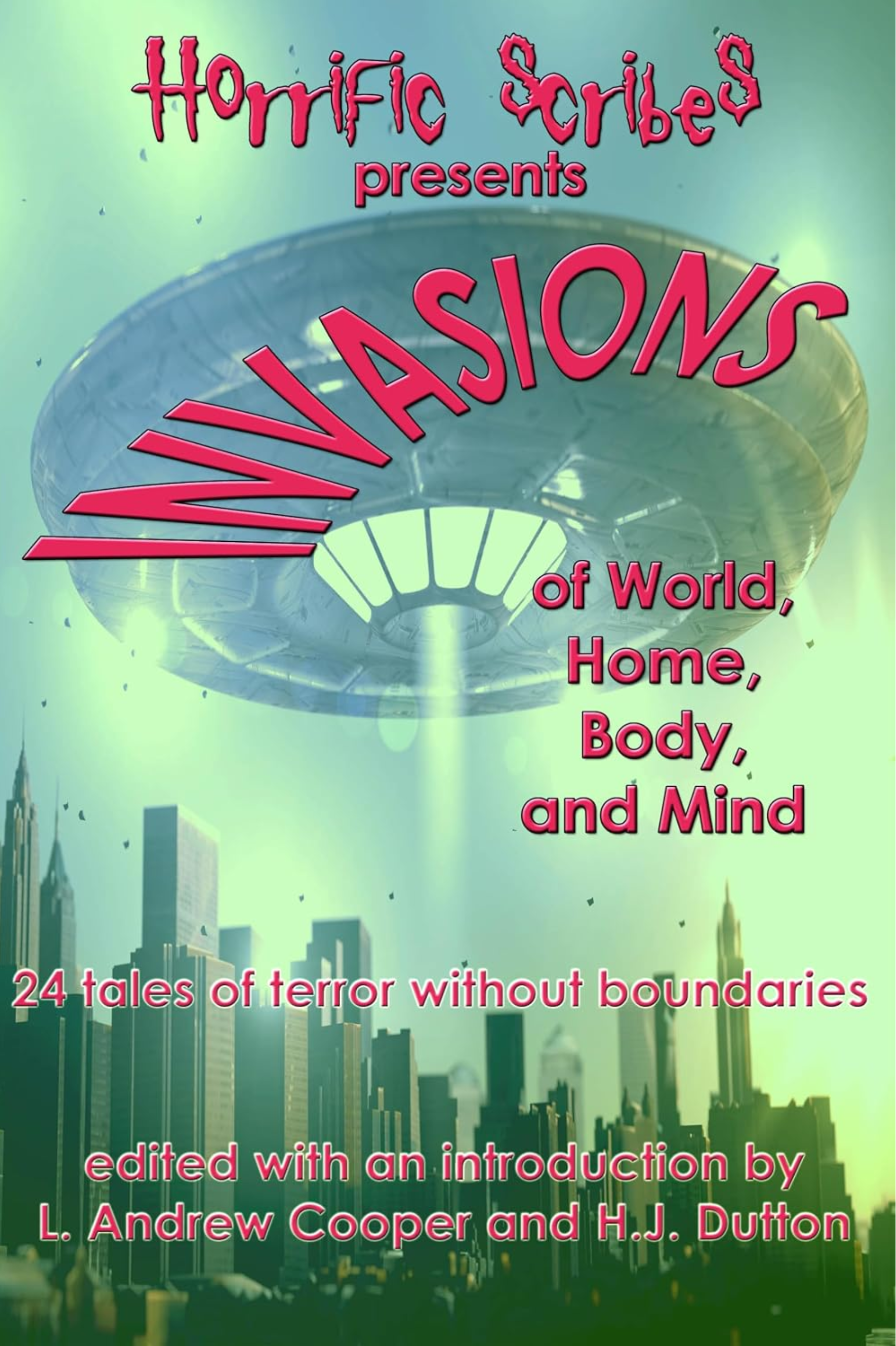
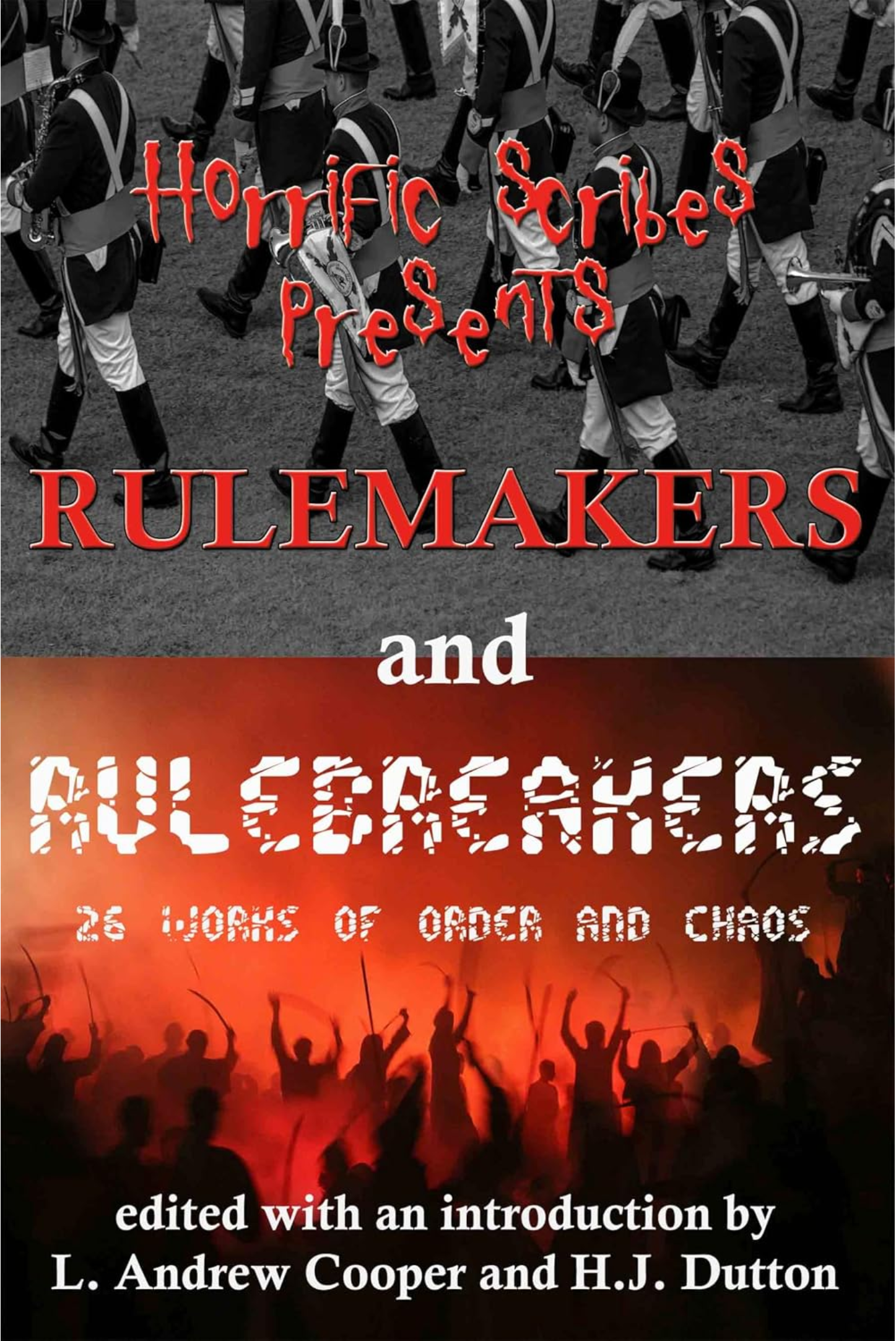
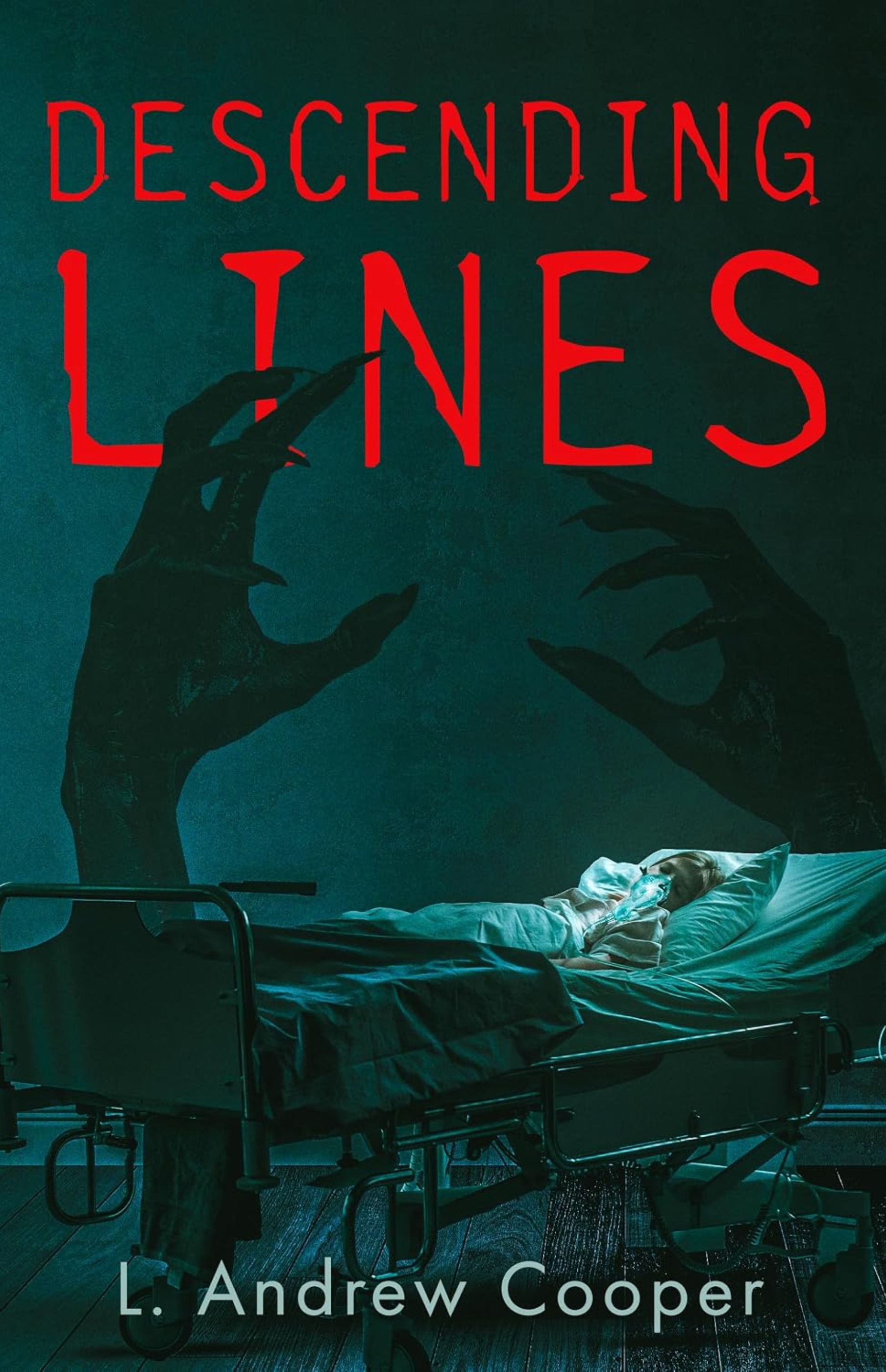
L. Andrew Cooper is the owner, publisher, and primary editor for fiction imprint Horrific Scribblings, which, among other things, publishes Horrific Scribes, a web archive of dark fiction. Cooper has edited three Horrific Scribes anthologies and several previous anthologies. As a writer, his works include novels and novellas The Skinner Effect, Father Is Pleased, The Middle Reaches (a series), Alex’s Escape, Noir Falling, Records of the Hightower Massacre [with Maeva Wunn], Crazy Time, Burning the Middle Ground, and Descending Lines, along with short story and poetry collections.
H.J. Dutton is a Pennsylvania-based writer and Assistant Editor at Horrific Scribes. His work has been featured on Audience Askew, Creepy-A Horror Podcast, Cryptic Frog Quarterly, Underside Stories, Killer Nashville, Emerald City Ghosts, and Penumbra: Journal of Weird Fiction and Criticism. He also co-edited two previous Horrific Scribes anthologies.
Buy other books from L. Andrew Cooper on Amazon:
Header Photo: "Riot Radio" by Arielle Calderon / Flickr / CC By / Cropped
Silver Screen Video Banner Photos: pedrojperez / Morguefile; wintersixfour / Morguefile
Join Button: "Film Element" by Stockphotosforfree
Twitter Icon: "Twitter Icon" by Freepik
Facebook Icon: "Facebook Icon" by Freepik
LinkedIn Icon: "LinkedIn Icon" by Fathema Khanom / Freepik
Goodreads Icon: "Letter G Icon" by arnikahossain / Freepik
Certain images on this site appear courtesy of Amazon.com and other sponsors of Silver Screen Videos for the purpose of advertising products on those sites. Silver Screen Videos earns commissions from purchases on those sites.
© 2026 Steven R. Silver. All rights reserved.
